
Leg Press Foot Placement: A Simple Guide to 5 Positions
MyFitnessCoach
October 23, 2026
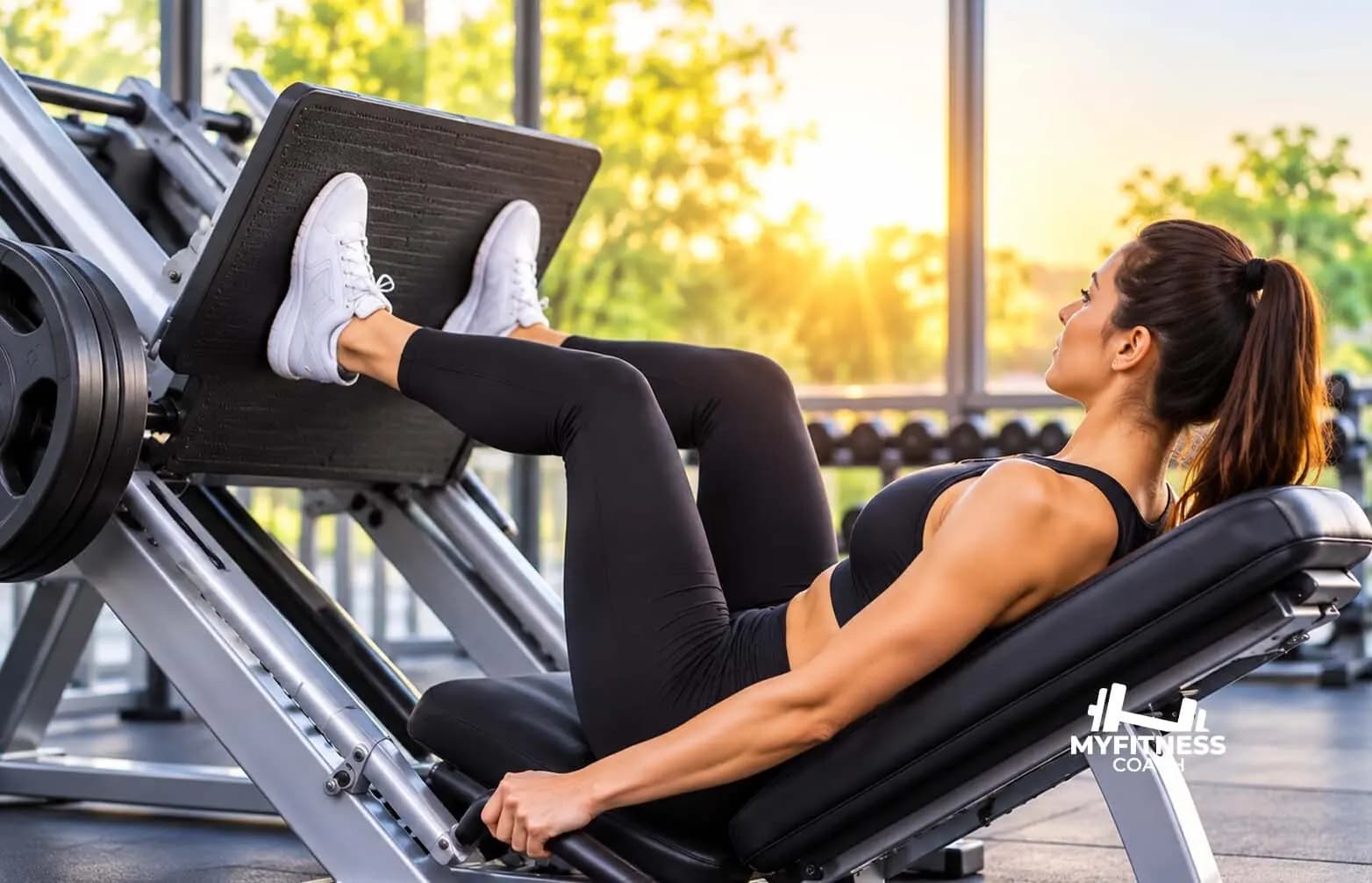
High foot placement on the leg press shifts a little more work to the glutes and hamstrings, and low placement shifts it toward the quads. That's the part with some research behind it. The rest of what you read about wide, narrow and toes-out stances is mostly not supported by leg press EMG studies. Pick the position that lets you go deep with a steady pelvis.
This guide shows where to put your feet, what the research does and doesn't show, how to do the exercise step by step, and what to do if you can't feel your glutes.
Key takeaways
- Foot height has some evidence. High feet: more glute activity. Low feet: more quad activity.
- Stance width and toe angle have little leg press evidence, despite popular claims.
- Go as deep as your hips stay on the pad. Stop before your pelvis tucks under.
- The leg press is quad-dominant. For glutes, add hip thrusts or Romanian deadlifts.

Table of Contents
Subscribe to our newslettter
Muscles Worked in the Leg Press
The leg press works your quadriceps (the front of the thigh), glutes, hamstrings and calves. The quads do most of the work.
| Muscle | Role |
| Quadriceps | Straighten the knee, main mover |
| Glutes | Extend the hip |
| Hamstrings | Help at the hip |
| Calves | Stabilize the ankle |
Why people use it: it lets you push heavy loads with less strain on your spine than a squat. Researchers note that both the 45-degree and horizontal versions allow a high external load with reduced axial compression (Escamilla 2001).
Foot Placement Guide: Where to Target What
| Position | Where your feet go | Likely emphasis | Evidence |
| High | Upper platform, hip-width | Glutes, hamstrings | Some |
| Low | Lower platform, hip-width | Quads | Some |
| Mid | Middle, shoulder-width | All-round, comfortable | Default |
| Wide, toes out | Wide, about 30° out | Inner thighs, glutes (claimed) | Weak |
| Narrow | Close together | Outer quads (claimed) | Weak |
What the research shows. A 2020 systematic review of leg press EMG studies found mixed results.
- Da Silva 2008 tested 14 trained women at 40% to 80% of their one-rep max. A high foot position gave greater gluteus maximus activity, and a low position gave greater rectus femoris and vastus lateralis activity. At 80%, the glute difference showed up.
- Escamilla 2001 tested trained lifters on eight leg press variations (narrow vs wide, low vs high, toes forward vs turned out). Foot height, stance width and foot angle did not change thigh muscle activity.
- A 2020 study in young women found the inclined leg press worked the vastus medialis regardless of stance width (100% to 150% of hip width) or foot rotation (0° to 45°).
What that means: foot height may shift emphasis a little, but wide, narrow and toes-out claims aren't backed by leg press EMG. Those claims likely trace back to squat research, which isn't the same exercise. No study found for this guide measured muscle growth from different foot positions, so these are activity results, not growth results.
Watch Each Foot Position in Action
Shows each foot position in the video below. As you watch, look at three things for each one: how deep the platform goes before the hips lift, where the knees travel, and where the effort shows up first.
You can log your sets and notes in the workout logger.
.webp)
How to Do the Leg Press (Step by Step)
These steps are common practice, not study results.
- Set the seat so you can lower the platform with your hips and lower back staying on the pad.
- Place your feet flat on the platform in your chosen position.
- Unrack and brace. Take a breath and keep your hips down.
- Lower slowly over about two to three seconds, with your knees tracking over your toes.
- Stop when your knees are about 90 degrees, or just before your pelvis starts to tuck under or your lower back lifts. That's your depth.
- Push through your whole foot to extend your legs. Stop just short of locking your knees.
Breathing: in on the way down, out on the way up.
Why Don't I Feel My Glutes on the Leg Press?
The leg press is quad-dominant, so feeling it mainly in the front of your thighs is normal. If you want more glutes, try these:
| Cause | Try |
| Feet too low or narrow | Move feet higher, hip-width or slightly wider |
| Not deep enough | Go to just before your pelvis tucks |
| Pushing through your toes | Push through the whole foot |
| Rushing | Take 2–3 seconds down |
| Wrong exercise for the goal | Add a hip thrust or Romanian deadlift |
Even with high feet, the difference in the research was modest. For primary glute work, see the glute bridge and machine workouts for glutes.
Leg Press vs Squat
| Leg press | Squat | |
| Balance needed | Low | High |
| Spine load | Lower | Higher |
| Trunk work | Little | More |
| Best for | Heavy leg work, learning | Whole-body strength |
No head-to-head growth study was found for this guide, so neither is proven better. Many lifters use both.
Common Mistakes
| Mistake | What happens | Fix |
| Hips lift off the pad | Lower back rounds | Stop earlier |
| Locking knees at the top | Joint stress | Stop just short |
| Knees cave in | Knee strain | Track over toes |
| Heels lift | Feet too high or low | Move feet |
| Bouncing at the bottom | Loses control | 2–3 sec down |
| Too heavy, tiny range | Poor results | Lighter, full range |
Leg Press Variations
| Variation | Guide |
| Single leg | Leg press single |
| Wide stance | Sumo leg press |
| No machine | Leg extension with bands |
| Part of a session | Leg workout at the gym for women |
The Bottom Line
Foot height can shift the work slightly, and the rest of the foot-placement rules are weaker than they sound. Pick a position you can control, go as deep as your hips allow, and add hip-focused exercises if glutes are your goal.
To log your leg press weights and watch them climb, use the workout logger in MyFitnessCoach.
This article is for general information and isn't medical advice. If you have knee, hip or back problems, talk to a qualified professional before changing your training. Stop if you feel sharp pain.
Frequently Asked Questions
Similar Articles
Stay informed with these similar articles.
MyFitnessCoach
September 12, 2025
Best Workout Logger App: Track Sets, Reps & Progress with MyFitnessCoach
When it comes to achieving fitness goals, tracking your workouts is just as important as performing them. That’s where a workout logger app becomes an essential tool. Instead of writing sets and reps on paper or trying to remember your last workout, a digital workout tracker helps you log everything in one place, monitor progress, and stay consistent.
MyFitnessCoach
November 15, 2023
Glute Bridge with Weights: Uncovering Strength and Stability
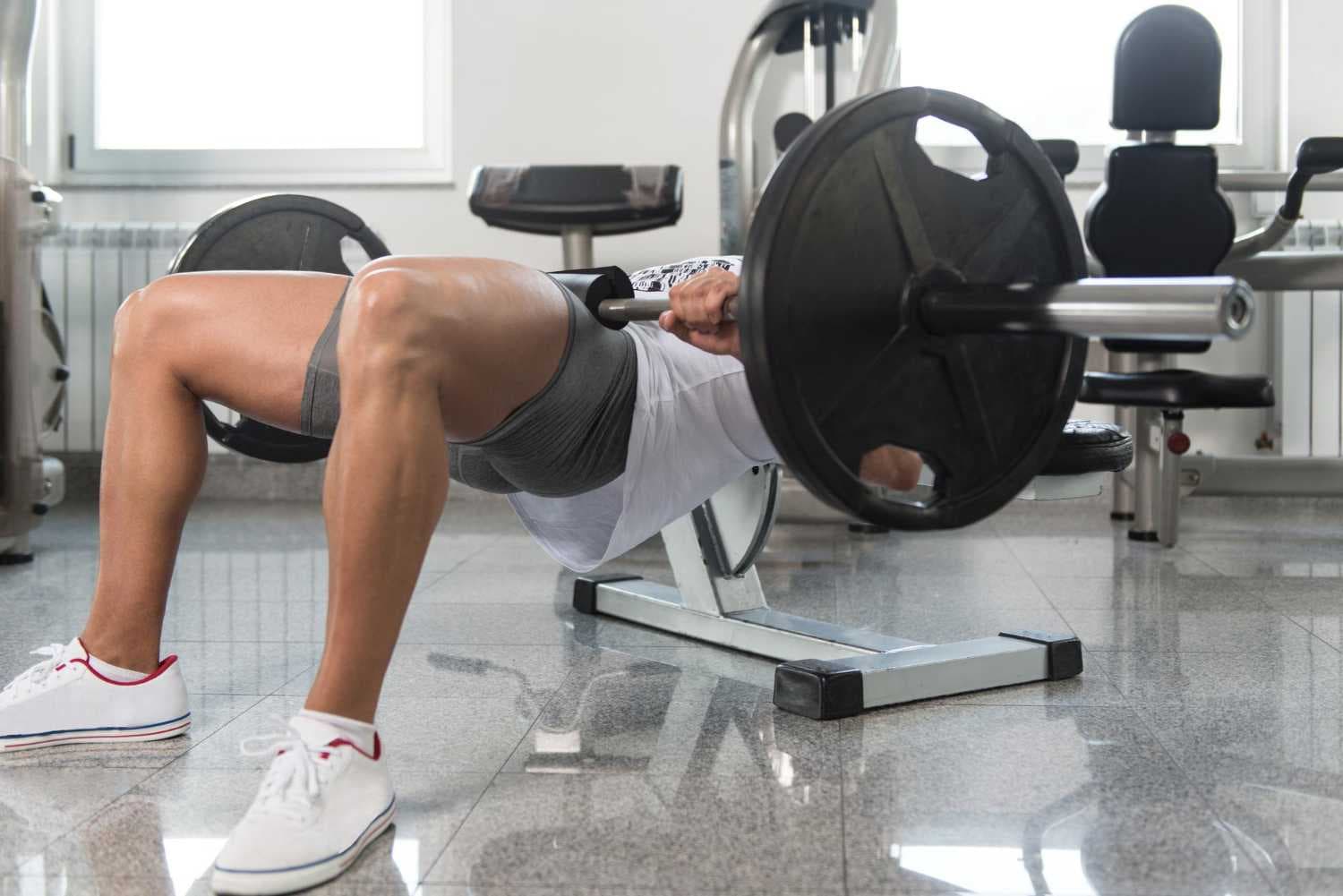
In the fitness world, this exercise is not always in the spotlight but is highly effective – it's the Glute Bridge with weights. Now, this exercise might seem easy, but it does way more than give you a nice-looking buttock. We'll look at how the glute bridge works, discuss why adding weights is a good idea, and walk you through the steps to get good at this exercise – like a hidden treasure in the fitness world. Let's start:
MyFitnessCoach
March 18, 2025
Machine Workouts for Glutes: Build a Stronger, Shapelier Booty
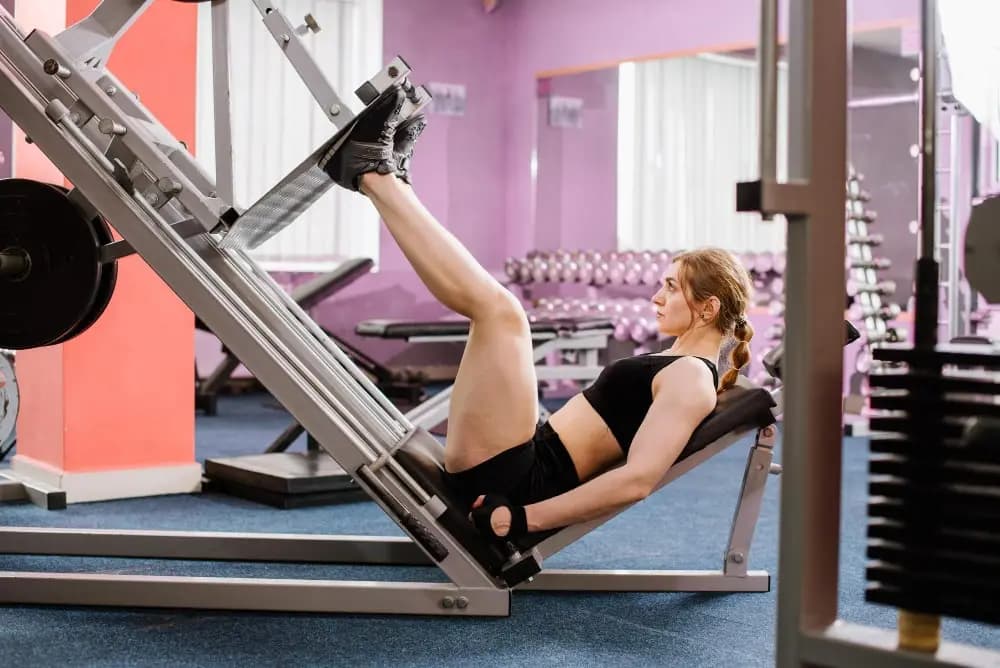
If you want to develop strong, well-defined glute muscles, using workout machines can make a big difference in your progress. These machines provide a safe and controlled way to strengthen your glutes, whether you are just starting your fitness journey or have been working out for a long time. In this article, we will take a closer look at some of the best machine exercises for building glute strength and shape. You will learn how to perform each exercise correctly to maximize results while avoiding injuries. We will also explain why these machines are so effective for glute training. Additionally, we will introduce you to MyFitnessCoach, a fitness app designed to help you stay consistent and motivated as you work toward your glute goals..