
Cable Lateral Raise: 6 Setups, Proper Form & What Works
MyFitnessCoach
October 13, 2026
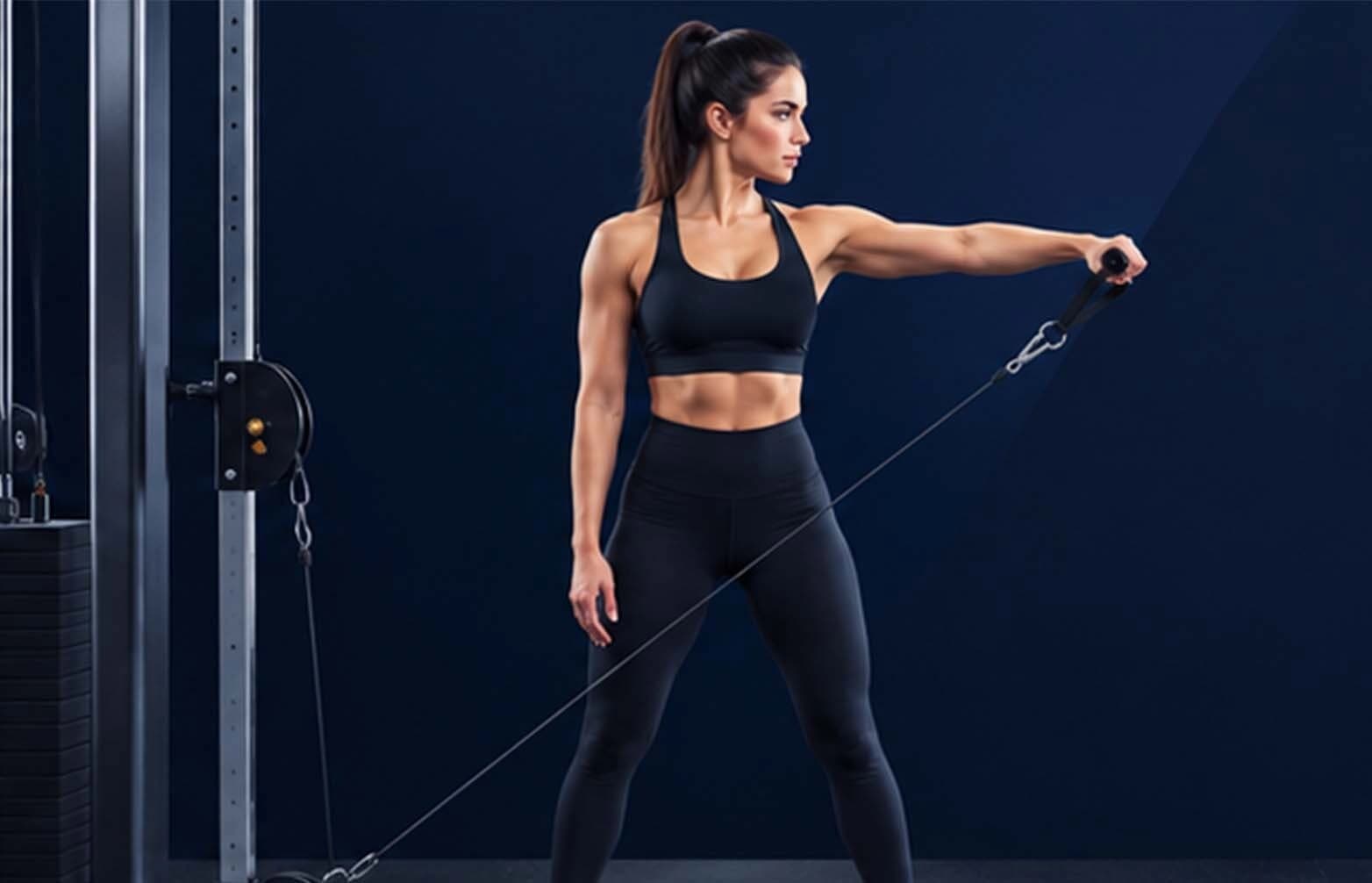
The cable lateral raise trains the side of your shoulder, the lateral deltoid, using a cable pulley instead of a dumbbell. Done with a soft elbow bend and your elbow leading the movement, it's a simple way to build shoulder width. The research is more modest than gym lore suggests, though. In an 8-week trial of trained lifters, cable and dumbbell lateral raises grew the lateral deltoid by about the same amount.
This guide shows how to do the exercise step by step, compares six cable setups, explains what that trial did and didn't find, gives a realistic idea of how much weight to use, and fixes the mistakes that make the movement feel pointless.
Key takeaways
- Raise your arm out to the side until your upper arm is about shoulder height, and lead with your elbow, not your hand.
- In an 8-week trial of 24 trained lifters, cable and dumbbell lateral raises grew the lateral deltoid by a similar amount (about 3% to 5%). Use whichever one you can do with clean form.
- Six cable setups exist: low pulley, raised pulley, behind the back, leaning, seated and lying. No study has compared them head to head.
- Progress slowly. Small muscles gain weight slowly, and a 5 lb jump on the stack is often too big. Add reps first.

Table of Contents
Subscribe to our newslettter
What Is a Cable Lateral Raise?
A cable lateral raise is a shoulder exercise where you raise one arm out to the side against a cable pulley until it reaches about shoulder height. It trains the lateral deltoid, the side of the shoulder, and the cable keeps tension on the muscle through most of the lift. It's usually done one arm at a time.
You'll also see it called the cable side lateral raise or the lateral raise cable. It's a common finishing exercise on push days and shoulder days, because almost every gym has a cable station.
Muscles Worked in the Cable Lateral Raise
The cable lateral raise mainly works the lateral (side) deltoid. Other muscles help, and your core works to keep you from being pulled sideways.
| Muscle | Role |
| Lateral deltoid | Main mover. Lifts your arm out to the side |
| Trapezius (upper traps) | Helps a little, and takes over if you shrug |
| Rotator cuff muscles | Stabilize the shoulder joint, and the supraspinatus helps start the lift |
| Anterior and posterior deltoids | Assist, especially if your arm drifts forward or back |
| Abs and obliques | Resist the cable's pull so your torso stays still |
Those are the main cable lateral raise muscles worked, in order of importance. Because it mostly trains the side of the shoulder, pair it with exercises for the front and rear delts, such as cable front raises and rear delt raises.
How to Do a Cable Lateral Raise (Step by Step)
.webp)
This is the single arm cable lateral raise, also called the one arm cable lateral raise. It's the version most people mean, and the one used in most guides.
- Set the pulley low and clip on a single D-handle.
- Stand side-on to the machine with your feet about shoulder-width apart. Take the handle in the hand farthest from the machine, so the cable crosses in front of your body.
- Step away until the cable is taut at the start. Stand tall, brace your core and keep a soft bend in your elbow.
- Raise your arm out to the side in a wide arc, leading with your elbow, until your upper arm is about shoulder height. Keep your palm facing the floor and your shoulder down, away from your ear.
- Pause for a beat, then lower under control until the handle is back in front of your thigh. Don't let the weight stack rest between reps.
- Finish your reps, then turn around and repeat with the other arm.
Breathing: exhale as you raise, inhale as you lower.
Cue that helps: some coaches suggest keeping your little finger slightly higher than your thumb, as if you were pouring out a cup of water.
Good cable lateral raise form comes down to three things: a still torso, a shoulder that stays down, and a weight you can raise without swinging. If you can only lift it by leaning or shrugging, it's too heavy.
If it pinches your shoulder: in the trial described below, some participants felt pain in the shoulder during strict raises straight out to the side. They were allowed to raise the arm partway between the side and the front instead. If your shoulder complains, that's a reasonable thing to try, with a lighter weight.
Which Cable Setup Should You Use?
Guides disagree on where to put the cable and how to stand. One says the pulley should be at the lowest setting. Another says that it puts less tension on the muscle when it's stretched, and suggests raising it. The six setups below cover the common options.
| Setup | How it works | What it changes | Best for | Watch for |
| 1. Standard low pulley | Pulley at the bottom, handle in the far hand, cable crossing your body | The most common version. Resistance is highest near the start, when your hand is by your thigh | Learning the movement | Shrugging as the weight gets heavier |
| 2. Raised pulley | Pulley around the height of your hand at rest | The setup used in the 2025 trial. It puts the biggest load at the start of the raise | Feeling it more at the bottom | Pulley height varies between machines, so check it each time |
| 3. Behind the back | Machine behind you, handle in your outside hand, arm starting slightly behind your hip | Changes the starting angle, which can add tension earlier in the lift. Some coaches say it lines up with the shoulder's natural plane (a coach's claim, untested) | Lifters who feel it in their traps | Start lighter. It feels different |
| 4. Leaning | Hold the machine with your other hand and lean away | Change the angle of pull so there's more load at the start, but you're less stable. Some coaches say adjusting the pulley height does the same thing more steadily (opinion) | Experienced lifters | Leaning so far you turn it into a trunk exercise |
| 5. Seated | Sit on a bench with your feet planted | Cuts out body sway, so the shoulder does the work | Beginners, or anyone who swings | Going too heavy. Seated reps feel stricter, so use less weight |
| 6. Lying | Lie on a bench with the cable pulling across your body. Versions differ: on your back between two low pulleys, or on your side | Removes standing balance and momentum | People who cheat when standing | Setup. The versions differ between sources, so start light |
Handle or cuff? A cuffed cable lateral raise uses a wrist cuff instead of a handle. Some lifters prefer how it feels, and it takes grip out of the equation. Cuffs are optional.
The honest part: no study has compared these setups head to head. The differences above come from reasoning about where the cable loads the muscle, not from measured results. In the one trial that does exist, the setup was the raised pulley (setup 2), and the movement was standardized.
Do Cable Lateral Raises Work? Cable vs Dumbbell: What the Research Shows
Short answer: yes, cable lateral raises build the lateral deltoid, and a 2025 trial found they did about the same as dumbbell lateral raises.
What the researchers did. A team at Nord University and CUNY Lehman College recruited resistance-trained men and women (at least three years of experience). Twenty-four completed an 8-week program with two sessions a week. Each person's arms were randomly assigned, so one arm did cable raises and the other did dumbbell raises. Sets were taken to failure, with a double progression (loads rose by only 0.25 kg at a time). The range of motion was standardized, from the arm at the side to 90 degrees. They measured lateral deltoid thickness with ultrasound at two points.
What they found. Muscle thickness rose by roughly 3.3% to 4.6% in both conditions. The two arms were close: at the distal site the cable arm grew 4.6% and the dumbbell arm 3.9%, and at the proximal site 3.3% and 3.4%. The statistics favored no difference between them. The authors concluded that either exercise can be used based on individual preference.
Why researchers expected cable to win. A dumbbell lateral raise is hardest when your arm is up, and easiest at the bottom. A cable can be set up to load the muscle more when it's stretched, near the bottom. Some research on other muscles suggests training at longer muscle lengths can help growth. The cable didn't win here.
What the study doesn't tell you.
- It was one study of 24 trained adults over 8 weeks. Longer studies might find something different, and the authors say so.
- The measuring error of the ultrasound (about 0.4 mm) was large compared with the changes (0.5 to 1 mm), so small differences could be hidden.
- The researchers fixed the range of motion in both conditions. A cable lets you start with the arm farther across the body while keeping tension on, so this study couldn't test that advantage.
- It tested one cable setup. It tells us nothing about behind-the-back, leaning or lying versions.
- There was no control group, and ultrasound was taken at two sites only.
What to make of it. You'll see claims online that cables are far better for side delts. This trial doesn't support that. Pick the version you can do with the best form, train it hard and often, and use both if you like variety. Our guide to the dumbbell side lateral raise covers that version.
Is a 20 lb Cable Lateral Raise Good? How Much Weight to Use
It depends on your body weight, and the answer is lower than most people expect. Side delts are small, and cable raises are a strict movement.
The table below uses one calculator's modeled standards for the single arm cable lateral raise (one handle, one arm, strict reps). They aren't research findings.
| Bodyweight | Intermediate | Advanced | Elite | Where 20 lb lands |
| Man, 150 lb | 11 lb | 18 lb | 26 lb+ | Advanced |
| Man, 180 lb | 14 lb | 22 lb | 31 lb+ | Intermediate (2 lb short of Advanced) |
| Man, 200 lb | 15 lb | 24 lb | 34 lb+ | Intermediate |
| Woman, 120 lb | 6 lb | 10 lb | 14 lb+ | Elite |
| Woman, 140 lb | 7 lb | 11 lb | 17 lb+ | Elite |
| Woman, 160 lb | 8 lb | 13 lb | 19 lb+ | Elite |
Take these with a grain of salt:
- Standards sites disagree. For the dumbbell raise, two calculators put a 180 lb man's intermediate level at 24 lb and 36 lb.
- A stack's number isn't always the load at your hand. Pulleys and cable ratios differ between machines, so a "20 lb" on one machine may feel different on another. Compare yourself with your own past sets, not with other gyms.
- Weight isn't the goal. Strict reps near failure are.
If you're stuck at 10 lb. That's normal. Side delts add weight slowly, and many stacks jump in 5 lb steps, which is a big increase for this muscle. Try this:
- Use a weight where you can do 3 sets of about 12 to 15 reps.
- When every set reaches the top of the range with clean form, add the smallest weight you can. In the trial, researchers raised the load by only 0.25 kg (about half a pound) at a time.
- If your stack only jumps 5 lb, add reps first. If your gym has small add-on weights, use them.
- Slow the lowering to two or three seconds before you add weight.
Common Mistakes and Troubleshooting
| Problem | Likely Cause | What to Try |
| My traps take over | Shrugging, raising above shoulder height, or too much weight | Keep your shoulder down, stop at shoulder height and go lighter |
| I feel it in my front delt | Your hand is drifting ahead of your body, or your thumb is up | Raise out to the side with your palm facing the floor, pinky slightly higher |
| I swing or lean to lift it | The weight is too heavy | Go lighter, brace your core, slow down. If you want to lean, do it on purpose (setup 4) |
| The cable goes slack at the bottom | You're standing too close to the stack | Step away so the cable is taut when your arm is by your side |
| My shoulder pinches | Raising strictly out to the side | Raise slightly in front of the side, lower the weight and stop if the pain is sharp |
| The weight stack rests between reps | Letting the plates touch at the bottom | Stop just short of the bottom, or keep a little slack |
| My grip gives out first | Grip is the limit | Use a cuff or straps, or lower the weight. The trial used straps for this reason |
| My torso twists | The cable is pulling you around | Stand tall, plant your feet a little wider and brace your core |
Sets, Reps and Where It Fits in Your Workout
There's no single research-backed dose. These are the range coaches and the trial used.
| Source | Reps | Sets | Rest |
| A common starting point | 8–12 | 2–3 per arm, 1–2 reps shy of failure | 1–2 min |
| A wider range some guides use | 6–20 | 3–4 | — |
| The 2025 trial | 12–16 reps to failure | 5 per arm, twice a week | About 90 seconds or more |
The trial's volume was high and was used for 8 weeks, so don't copy it as a starting point.
Where it fits: at the end of a shoulder, push or upper-body day, after your heavy pressing. Two to three times a week works for most people. For help pairing muscle groups, see which muscle groups to work together.
Example shoulder day: overhead press, 3 sets of 6 to 10. Cable lateral raise, 3 sets of 10 to 15 per arm. Rear delt raise, 3 sets of 12 to 15. This is an example, not a prescription.
Cable Lateral Raise Alternatives
If your gym has no cable station, or you want variety, these alternatives train the same muscle.
| Alternative | Why use it | Guide |
| Dumbbell lateral raise | I work at home. In the 2025 trial it grew the lateral deltoid about as much | Side lateral raise |
| Machine lateral raise | Needs almost no balance, so you can focus on the muscle | Lateral raise machine |
| Egyptian lateral raise | A leaning dumbbell version, popular for loading the bottom of the raise | Egyptian lateral raise |
| Resistance band lateral raise | Cheap and portable. The band gets harder as you raise it | — |
For more cable options, see our guides to shoulder exercises using cable and cable exercises.
The Bottom Line
The cable lateral raise is a good way to train the side of your shoulder, but it isn't magic. Cable and dumbbell raises grew the muscle about equally in the best trial available, so the right choice is the one you can do with clean form, close to failure, week after week. Start with the standard low pulley, move to other setups if you want variety, and be patient with the weight.
To log your sets and watch your weights creep up, the workout logger in MyFitnessCoach is built for that.
This article is for informational purposes only and is not a substitute for professional medical advice, diagnosis, or treatment. Stop if you feel sharp pain. If you have a shoulder injury or persistent pain, consult a qualified healthcare provider before adding new exercises.
References
- Larsen S, Wolf M, Schoenfeld BJ, Sandberg NØ, Fredriksen AB, Kristiansen BS, van den Tillaar R, Swinton PA, Falch HN. Dumbbell versus cable lateral raises for lateral deltoid hypertrophy: an experimental study. Front Physiol. 2025;16:1611468. doi:10.3389/fphys.2025.1611468 · PubMed 40692697
- Endura. Single arm cable lateral raise strength standards calculator (modeled standards, not research)
Frequently Asked Questions
Similar Articles
Stay informed with these similar articles.
MyFitnessCoach
September 27, 2023
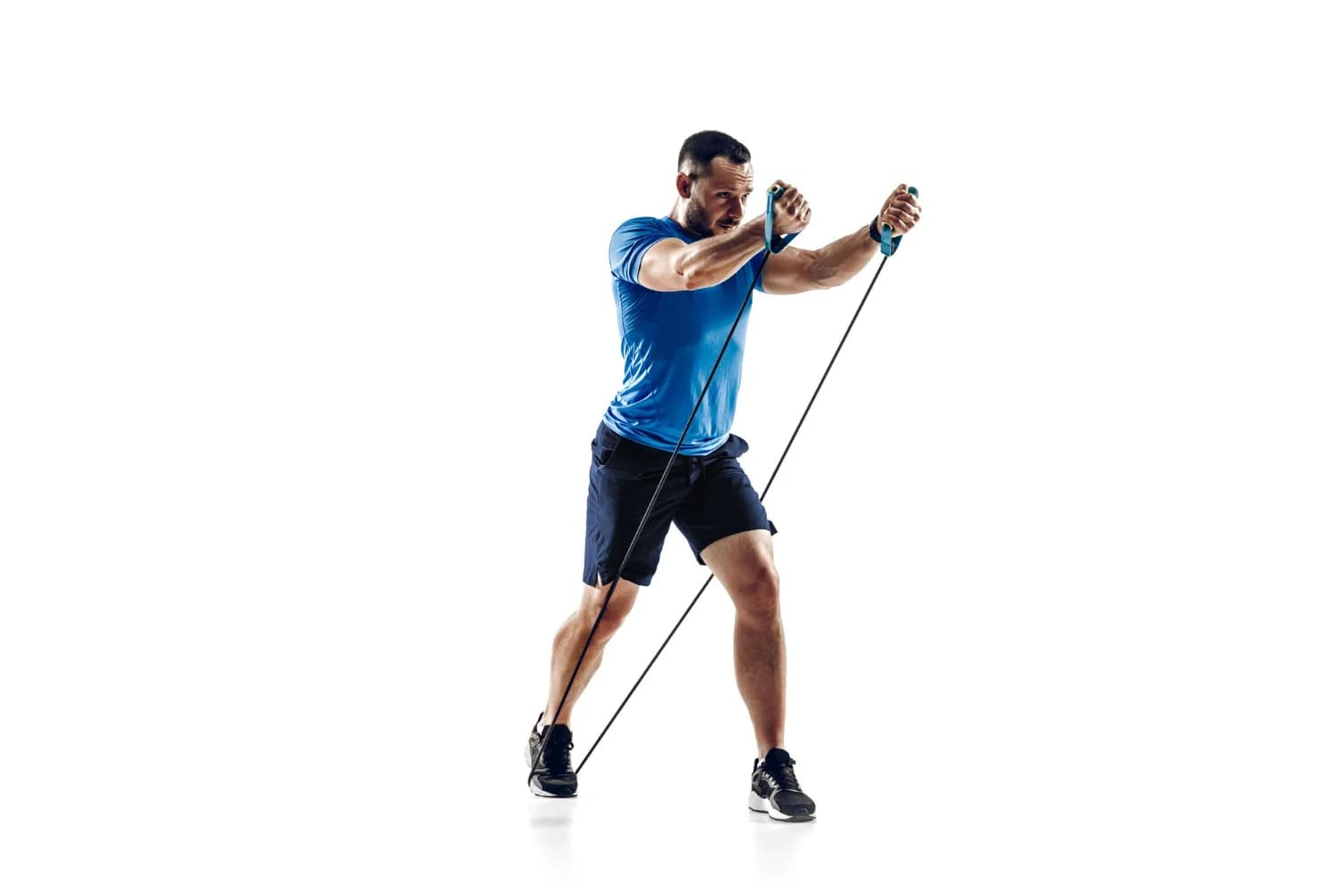
Mastering the Cable Front Raise: A Comprehensive Guide
In the quest for a sculpted upper body, a diverse exercise routine is essential. Among the array of exercises available, the cable front raise stands out as a powerhouse for targeting the front deltoids. This exercise, performed using a cable machine, can be a game-changer in your pursuit of well-defined shoulders. This guide is your comprehensive resource for mastering the cable front raise, covering everything from technique and benefits to variations and expert tips.
MyFitnessCoach
October 31, 2025
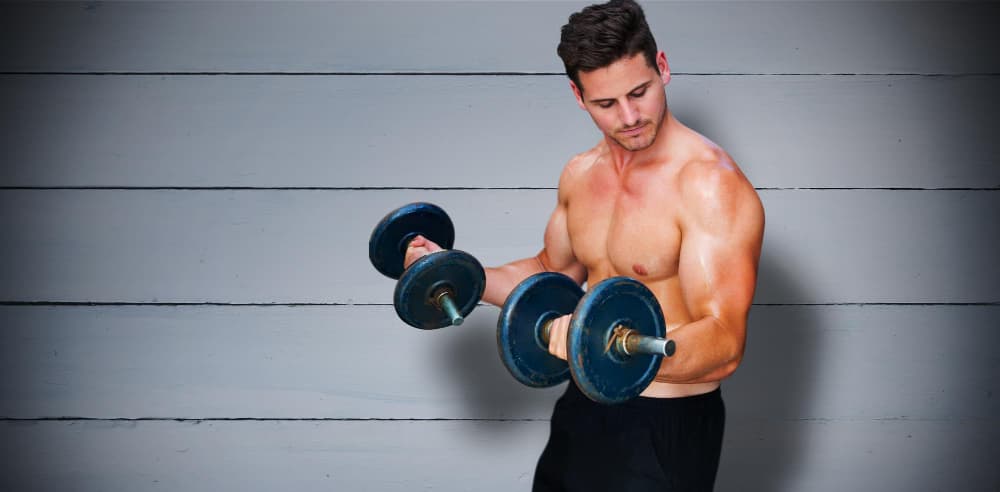
How to Do Rear Delt Raises | Benefits & Variations
When people think about shoulder training, they often focus on front and side delts, exercises like shoulder presses or lateral raises. But one muscle group that often gets ignored is the rear deltoids (rear delts). These small muscles play a crucial role in shoulder stability, posture, and balanced upper-body strength.

MyFitnessCoach
August 19, 2025
What is Side Lateral Raise: Benefits, Proper Form, and Variations
Building strong, defined shoulders is one of the keys to achieving a balanced and athletic upper body. Among all shoulder exercises, the side lateral raise stands out as one of the most effective movements for targeting the lateral deltoids. Whether you are a beginner or an advanced lifter, this exercise can help you add width to your shoulders, improve posture, and enhance overall strength.