
Why Do My Ankles Swell? 8 Causes, Red Flags & Quick Fixes
MyFitnessCoach
September 22, 2026
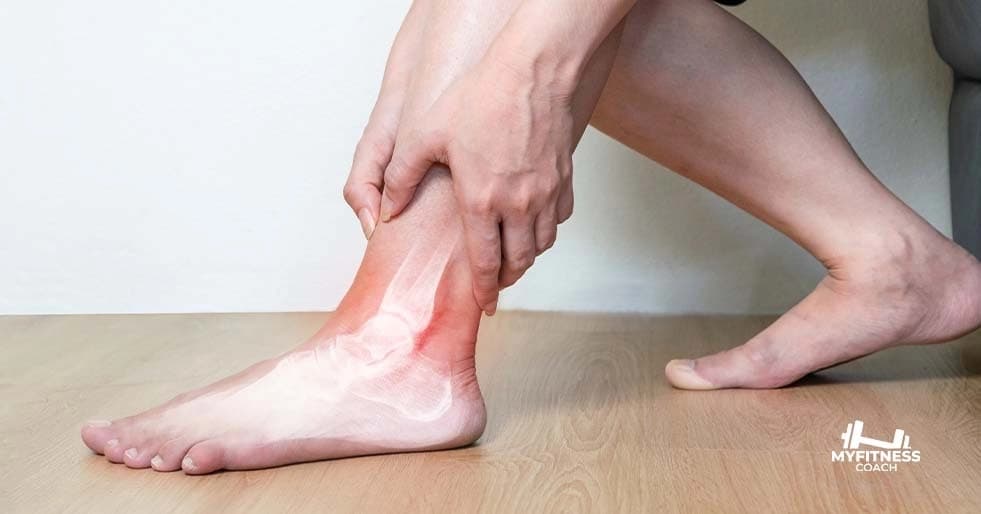
Your ankles swell when fluid leaks out of small blood vessels and collects in the surrounding tissue faster than your body can clear it. Doctors call this peripheral edema. Gravity pulls that fluid to the lowest point in your body, which is why ankles and feet puff up before anywhere else. Most cases trace back to how long you've been upright, heat, salt, or a medication but not all of them.
Two questions sort the harmless from the urgent, and the rest of this guide answers both:
- Is it one ankle or both?
- Is it new, sudden, or painful?
What's Actually Happening When Your Ankles Swell
Blood travels down to your feet under pressure from your heart. Getting it back up is harder. Unlike arteries, veins can't rely on the heart's pumping action to push blood in the right direction, so they depend on one-way valves to prevent backflow. When those valves malfunction, backward pressure builds and fluid leaks out of the vessels which is also how varicose veins develop. harvard
Your calf muscles are the other half of the system. Every time you walk, they squeeze the deep veins and push blood upward, which is why the problem is called the calf muscle pump. Sit still for three hours and the pump stops working. Fluid then collects in the legs, ankles and feet because gravity pulls it down and the calf and foot muscles that normally help pump blood back up aren't moving. bhf
That one mechanism explains almost every piece of advice further down this page. Elevation removes gravity. Walking restarts the pump. Compression supports the vessels. Cutting sodium reduces the total fluid volume in the system.
Why gravity makes ankles the first place you notice it
Feet and ankles are especially prone to swelling because of gravity; it's difficult for the circulatory system to carry accumulated fluid away from the body's lowest point. Painless swelling of the feet and ankles is a common problem, particularly in older adults, and it often affects both legs, sometimes extending up into the calves. doctorsunitedmedlineplus
The 2-Minute Self-Check: What Your Swelling Pattern Is Telling You
Three observations narrow things down fast. Check all three before you decide whether to worry.
1. Side. Look at both ankles side by side. Is one clearly bigger than the other?
2. Pitting. Press your thumb firmly into the soft tissue just above the ankle bone on the inside of your shin. Hold for 10 seconds, then release. If a visible dent stays behind for a few seconds, that's pitting. If the tissue springs straight back and feels firm or rubbery, that's non-pitting.
3. Timing. Is it worse in the evening and gone by morning? Constant regardless of time? Or did it appear suddenly over a few hours?
Now read your pattern:
| Pattern | Usually points toward | How fast to act |
| Both ankles, soft and pitting, worse in the evening, gone by morning | Gravity, prolonged standing or sitting, heat, salt, a medication | Try the home measures below; mention it at your next appointment |
| Both ankles, soft and pitting, still swollen at breakfast, plus breathlessness or rapid weight gain | Heart, kidney, liver or thyroid involvement | See a doctor within days |
| Both ankles, firm and non-pitting, developed gradually, stays after sleep | Lymphatic drainage problem (lymphedema) | Book an appointment; don't self-treat with compression |
| One ankle, sudden, painful, warm or red | Blood clot or skin infection | Same-day or emergency care |
| One ankle, after a twist or fall, with bruising | Sprain, fracture, or tendon injury | Same-day care if you can't bear weight |
| Sudden or severe swelling during pregnancy | Possible preeclampsia | Call your provider immediately |
This is a way to organize what you're seeing, not a diagnosis. Overlap between categories is common, which is exactly why persistent swelling gets checked.
Swelling in One Foot Only: Why One Ankle Swells and the Other Doesn't
Asymmetry is the single most useful clue on this whole topic, and the reason is mechanical. Salt, heat, gravity and medications act on your whole body, so they swell both legs roughly equally. If only one ankle is affected, something local is happening in that leg.
The main possibilities:
- Deep vein thrombosis (DVT). A clot in a deep leg vein blocks blood returning to the heart. Typically one leg, often with calf pain, warmth, redness, and swelling that doesn't ease with rest. Sudden swelling in one leg with pain, warmth or redness warrants same-day medical evaluation, and you shouldn't massage the affected leg, because of the risk of dislodging the clot. ubiehealth
- Cellulitis. A bacterial skin infection. The skin looks red, feels hot and tender, and fever may be present.
- Injury. A sprained ankle is the most common injury causing ankle swelling, stretching the ligaments that hold the joint in place beyond their normal range. webmd
- Lymphedema. A collection of lymphatic fluid in the tissues, which can follow radiation therapy or removal of lymph nodes. Anyone who has had cancer treatment and develops new swelling should be seen promptly. webmd
- A localized vein problem in one leg, including varicose veins concentrated on one side.
When only one ankle is swollen, the cause may be a blood clot or an ankle injury whereas the most common reason for swelling in both ankles is leaky valves in the leg veins. harvard
What Causes Swollen Ankles in Both Legs?
Ordered by how often each one is actually responsible, not by how alarming it sounds.
Prolonged standing, sitting, or travel. Lifestyle is the most common reason for swollen feet and ankles including sitting in a chair all day, standing for many hours at work, and travelling for long periods such as a long-haul flight. bhf
Salt. A high-salt diet, particularly from ultra-processed foods, makes the body hold onto water, increasing total fluid volume; that fluid then leaks out of the blood vessels and builds up in the tissues, especially in the lower body. bhf
Heat. Small blood vessels in the skin dilate in warm weather to let heat escape, which also means more fluid than usual can leak into surrounding tissue, especially in the legs. Standing for long stretches in hot weather can make ankles very swollen. harvard
Hormonal shifts. Fluctuating estrogen and progesterone across the menstrual cycle can reduce circulation in the legs and cause swelling.
Pregnancy. Some swelling is expected. But swelling that comes on suddenly or is severe can signal preeclampsia dangerously high blood pressure in the second half of pregnancy or shortly after birth. Call your provider right away if severe swelling comes with abdominal pain, headaches, reduced urination, nausea and vomiting, or vision changes. webmd
Venous insufficiency. The leaky-valve problem described earlier, and the most common cause of long-standing swelling in both ankles.
Body weight and age. Excess weight puts the lower limbs and circulation under strain, making fluid build-up more likely, and the circulatory system becomes less efficient with age. doctorsunited
Organ-related causes. Fluid retention can stem from kidney or liver problems, heart conditions, malnutrition, thyroid disorders, and anemia. Swelling of the legs, feet and ankles can occur with heart failure, particularly alongside shortness of breath, fatigue, or worsening fluid build-up. These are less common than the causes above, but they're the reason new persistent swelling gets investigated rather than ignored. harvardcls
Medications That Make Your Ankles Swell
This is the cause most often missed, and also the most fixable. Medication-related swelling is common enough that it's worth checking your own list before assuming anything else.
| Drug class | Examples | How it swells your ankles |
| Calcium channel blockers | amlodipine, nifedipine | Dilate small arteries without dilating veins, raising pressure inside the capillaries |
| Gabapentinoids | gabapentin, pregabalin | Similar vessel-relaxing effect on artery walls |
| NSAIDs | ibuprofen, naproxen | Sodium and water retention |
| Corticosteroids | prednisone | Sodium and water retention |
| Hormone therapies | estrogen, testosterone, some contraceptives | Fluid retention and vessel effects |
| Some diabetes medications | pioglitazone | Fluid retention |
| Certain psychiatric and Parkinson's medications | — | Vessel dilation |
The scale is real. Up to about 1 in 10 older adults taking amlodipine or nifedipine develop peripheral edema within a year of starting, up to about 1 in 20 on gabapentin or pregabalin, and NSAIDs roughly double the rate of swelling through sodium retention. ubc
Two details worth knowing. Calcium channel blocker swelling is typically diffuse, affects both feet and ankles, worsens through the day and improves overnight and it's a local vascular effect rather than the result of the body retaining salt and water. That's why this vasodilation-type swelling doesn't respond to diuretics, while NSAID-related swelling usually does. authoreanih
Never stop a prescribed medication on your own. Bringing the observation to whoever prescribed it a dose change or a switch within the same class often resolves it.
Ankle Swelling After Exercise, Travel, or a Long Day on Your Feet
This is where most people's swelling actually comes from, and it's barely covered anywhere.
After a long run, hike, or hot training session. Hours of upright activity in heat combine the two biggest drivers: dilated skin vessels and gravity. Mild puffiness that resolves after a night's sleep is the expected pattern. One caveat for long endurance efforts in heat: drinking large volumes of plain water while losing a lot of sodium through sweat can dilute your blood sodium, which is a separate problem and not a reason to cut salt even further on those days. Understanding how your body handles heat and sweat during workouts helps explain why post-training puffiness happens in the first place.
Desk work. Sitting with knees bent and feet down switches off the calf pump for hours at a stretch. Standing up for two minutes every half hour does more than any single intervention here.
Standing jobs. Nurses, teachers, retail and hospitality staff, hairdressers. Static standing is worse than walking, because the calf pump only works when the muscles contract and relax.
Flights and long drives. Immobility plus cabin pressure plus dehydration. Prolonged immobility is also a genuine clot risk factor, which is why swelling in one leg after a long flight belongs in the same-day category, not the "wait and see" one.
The line to watch: end-of-day swelling that has fully resolved by the time you get out of bed is a positional pattern. Swelling that's still there at breakfast has stopped being positional and deserves a conversation with a doctor.
When Swollen Ankles Are an Emergency: Red Flags by Urgency
Sorted by how quickly you need to move.
🔴 Get emergency care now
Call 911 or seek care immediately if leg swelling comes with chest pain, difficulty breathing, shortness of breath on activity or when lying flat, fainting or dizziness, or coughing up blood these can indicate a clot in the lungs or a serious heart problem. Also seek emergency care for sudden unexplained swelling in just one limb, or swelling with fever or skin that is red and warm to the touch, which can point to DVT, pulmonary embolism, or cellulitis. In pregnancy, sudden severe swelling with headache, vision changes, or upper abdominal pain is an immediate call. mayoclinicdukehealth
🟠 Get seen the same day or within a few days
Get care right away if swelling happens suddenly with no clear reason, follows a physical injury such as a fall or sports injury, or affects one leg only especially if it's painful or the skin feels cool and looks pale. Also in this tier: new swelling in both legs that doesn't clear overnight, swelling alongside unexplained weight gain or breathlessness lying flat, skin that's tight, shiny, or weeping fluid, and any new swelling if you have diabetes, a previous clot, or known heart, kidney, or liver disease. mayoclinic
🟡 Monitor and mention it
Swelling that appears in the evening after a long day upright, resolves by morning, affects both sides equally, and has an obvious trigger. Work through the home measures below. That said, if the ankle swelling is new, it's worth a call to your doctor and swelling caused by a medication can look identical to swelling caused by a kidney disorder, which is why it's worth an appointment rather than guesswork. harvardmayoclinic
What Actually Helps Swollen Ankles at Home
Ranked by how much difference each one typically makes for positional swelling.
- Elevate above heart level. Not just "put your feet up." Swelling can often be relieved by raising the legs above the heart while lying down. Twenty minutes, a few times a day, with pillows under the calves rather than under the ankles alone. medlineplus
- Restart the calf pump. Ankle pumps and circles while seated, calf raises, and a two-minute walk every 30 minutes. Avoid sitting or standing without moving for prolonged periods. medlineplus
- Compression. Support hose or the compression calf sleeves favored by runners, combined with elevating the ankles above heart level, can reduce swelling from leaky vein valves. Put them on first thing in the morning, before swelling accumulates. harvard
- Reduce sodium. Cutting salt intake decreases water retention. The biggest wins are packaged and restaurant food, not the salt shaker. harvard
- Check your sock and shoe pressure. A tight sock band leaving a deep groove is worth switching out. Shoes that fit in the morning and hurt by 4pm are telling you something.
- Sleep position. A thin pillow under the lower legs overnight helps some people clear fluid faster.
Four Things People Get Wrong About Swollen Ankles
"Drink less water and the swelling will go down." Usually backwards. Restricting fluids doesn't reduce fluid that's already in your tissues, and dehydration prompts the body to hold onto what it has. Unless a doctor has given you a specific fluid restriction for a heart or kidney condition, drink normally and address sodium instead.
"A diuretic or a detox tea will fix it." For some causes, a diuretic is the right treatment, prescribed and monitored. But the vasodilation mechanism behind calcium channel blocker and gabapentinoid swelling doesn't respond to diuretics at all, and over-the-counter "water pills" and detox teas are genuinely risky if you have undiagnosed heart or kidney disease. They also remove the symptom that would have sent you to get checked. nih
"It's just age, everyone's ankles swell." Common isn't the same as harmless. This assumption is the main reason one-sided and sudden swelling gets ignored for days, the exact swelling that needs same-day care.
"Compression socks are always a good idea." Fit and graduated pressure matter, and compression isn't appropriate for everyone. Anyone with reduced circulation in the arteries, diabetes-related nerve or circulation problems, or a suspected clot should get medical clearance before compressing the leg.
What Does Swollen Ankles Mean for Your Workouts?
.webp)
For ordinary end-of-day swelling, movement is the treatment rather than the problem the calf pump only works when you use it. Walking, cycling, swimming, and calf-focused work all support venous return, and swimming has the added advantage of water pressure on the legs.
Three situations where you stop instead of training through it: swelling in one leg only, swelling with pain or warmth, and swelling that's new and unexplained. Those need answers first. If you're building a routine around a standing job or a desk job and want the movement breaks and lower-body work built into your week rather than remembered occasionally, that's the kind of structure a plan in the MyFitnessCoach app handles for you.
Track It Before You See a Doctor: A 7-Day Swelling Log
Most appointments for ankle swelling start with "how long has this been going on?" and a vague answer. Seven days of notes turns that into something a clinician can work with. Copy this out:
| Day | AM swelling (0–3) | PM swelling (0–3) | One side or both? | Pitting? | Hours standing / sitting | Salty meals | New or changed meds | Other symptoms |
| Mon | ||||||||
| Tue | ||||||||
| Wed | ||||||||
| Thu | ||||||||
| Fri | ||||||||
| Sat | ||||||||
| Sun |
Score 0 = none, 1 = slight, 2 = obvious, 3 = shoes or socks don't fit. Add a morning photo of both ankles side by side from the same angle each day. Under "other symptoms," note breathlessness, weight change, fatigue, or urine changes.
Two patterns this log reveals that memory won't: whether swelling truly clears overnight, and whether it started within weeks of a new prescription.
The Bottom Line
Most swollen ankles come down to gravity, heat, salt, or a medication, and respond to elevation, movement, and compression. Read three things before you decide whether to worry: one ankle or both, pitting or firm, and whether it clears by morning. One-sided, sudden, painful, or warm swelling, and any swelling with chest pain or breathlessness, needs medical care today rather than a home remedy.
If the pattern points to long hours sitting or standing, structured daily movement is the fix and a guided plan makes that consistent instead of occasional.
This article is for general information and isn't a substitute for medical advice. New, sudden, painful, or one-sided ankle swelling should be assessed by a healthcare professional.

Frequently Asked Questions
Similar Articles
Stay informed with these similar articles.
MyFitnessCoach
May 9, 2025
Why Kneecaps Sweat? 5 Surprising Causes & Proven Fixes
Ever noticed your knees getting sweaty for no reason? You're not alone. Sweaty kneecaps might seem odd, but they're more common than you think.

MyFitnessCoach
May 16, 2023
Easy And Effective Core Workouts At Home
The world is constantly changing and getting fast-paced. You can find it pretty challenging to take time from your busy schedule to visit the gym. However, having a fitness routine and maintaining a strong core are essential to health. This ensures overall fitness and stability.Don't get worried you don't need to get through the tedious gym routine to stay fit and healthy. You can achieve your fitness goals from the comfort of your own home. This article will explore easy and effective core workouts you can effectively do at home. You will need minimal equipment to get maximum results while at home.

MyFitnessCoach
July 2, 2023
What is Physical Fitness And How To Stay Active And Healthy
Physical fitness is an all-encompassing term for the health and well-being of a person's body as a whole. Most of the time, the term "physical fitness" refers to any daily physical exercise. It also means keeping your body in the best shape possible, which gives your muscles strength, stamina, and speed for different kinds of physical activities. Getting and staying physically fit is important for a healthy and well-balanced life. This article aims to delve into the components of physical fitness, its benefits, and the strategies for achieving optimal health and well-being: