
Rice With Chicken Calories: 4 Prep Methods to Know
MyFitnessCoach
July 3, 2026
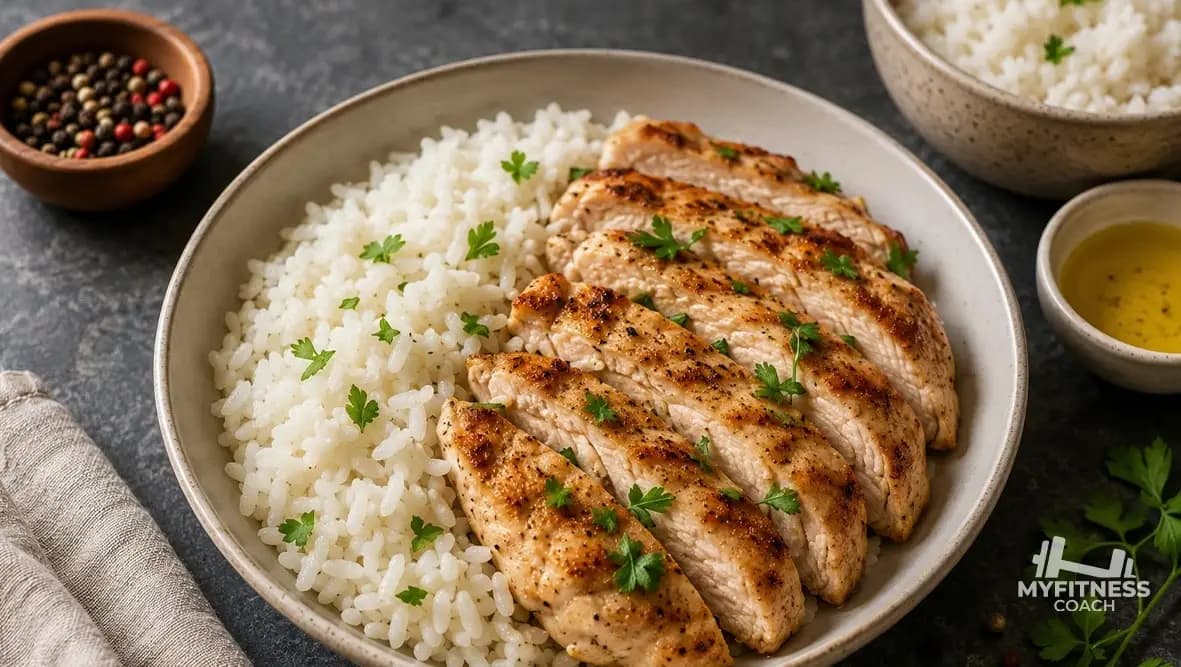
You made a big batch of chicken and rice on Sunday, and now you're staring at the container trying to guess if it's 300 calories or 600. Rice with chicken calories aren't one fixed number they range from about 245 to 850+ per serving depending on three things: the chicken cut, the oil or sauce, and how much rice actually lands on your plate. The gap between a lean, home-cooked bowl and a restaurant-style version is often 400 calories or more, and the difference usually comes down to preparation, not the ingredients themselves.
Rice with chicken is simply cooked rice paired with a portion of chicken, prepared anywhere from plain and steamed to pan-fried with soy sauce and oil. That single description covers a huge calorie range, which is exactly why guessing gets people into trouble. This guide breaks the dish apart piece by piece so you can identify which version you're actually eating.
Table of Contents
Subscribe to our newslettter
Quick Answer
A standard bowl of rice with chicken runs 245 to 350 calories per cup when it's grilled or steamed chicken with plain rice, and 500 to 850+ calories per serving for takeout-style fried rice or restaurant chicken rice loaded with oil and sauce. Chicken breast and rice alone, with nothing added, land closer to the low end.
Calories by Preparation Method
Not all "chicken and rice" is the same meal. The prep style swings the calorie count by 300 calories or more, even when the portion size looks identical on the plate. Figures below are estimates compiled from USDA nutrient data and commonly reported meal-prep macros; your exact numbers will vary by brand, cut, and cooking method.
The cooking oil, sauce, and chicken skin drive most of the calorie difference between entries in this table not the rice or chicken themselves. If you only remember one number, make it this one: plain grilled chicken with rice sits around 345 calories, while the same dish fried or sauced can nearly double.
Chicken Alone vs. Rice Alone
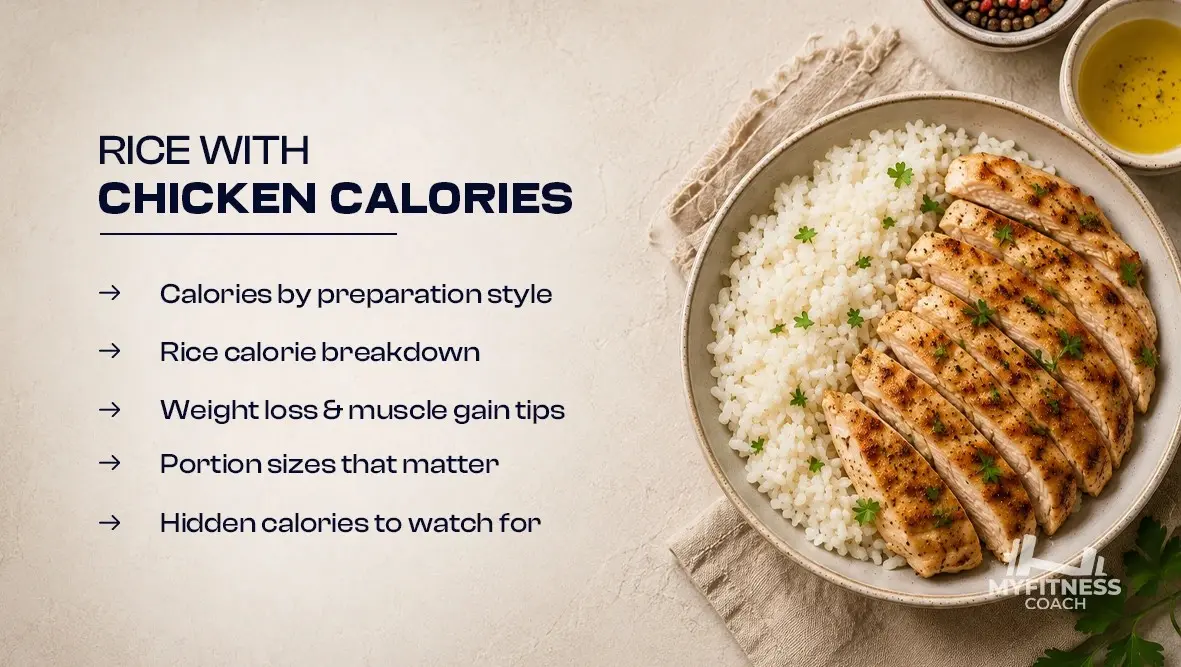
Splitting the dish into its two parts makes the math easier to control. A 3-ounce serving of skinless, boneless chicken breast holds about 140 calories and 26 grams of protein, with barely any carbs or fat. One cup of cooked white rice adds roughly 205 calories, 45 grams of carbs, and 4 grams of protein. You can verify these baseline figures yourself at USDA FoodData Central, the federal government's public nutrient database.
Brown rice runs close to white rice in calories but adds more fiber, which affects fullness more than total calorie count. Chicken thigh, especially with skin, carries roughly double the fat of chicken breast for the same weight. Swapping thighs for breast, or removing the skin, is one of the simplest ways to cut 80 to 100 calories without changing the portion size at all.
Why Portion Size Changes Everything
A "cup of rice" means two very different things depending on whether you measure it raw or cooked, and mixing the two up is one of the most common calorie-tracking errors. Rice roughly triples in volume once cooked, so a cup of dry rice becomes close to three cups cooked. If you're weighing ingredients before cooking but logging your meal after, your numbers will be off by a wide margin.
A kitchen scale solves this in seconds. Weigh your chicken and rice after cooking, in grams, and match that weight against a food database entry that specifies "cooked." It's a small habit that fixes most of the guesswork with this dish.
Restaurant portions add another layer of unpredictability. A takeout container of chicken and rice can easily hold two or three standard servings, especially once it's covered in sauce. Ordering sauce on the side, or asking for less rice, keeps the calorie count closer to a homemade version.
Rice With Chicken for Weight Loss
Chicken and rice has a reputation as a reliable weight-loss meal, and for good reason. Lean chicken breast delivers protein without much fat, and rice provides steady energy without the added sugar found in many packaged sides. Kept to roughly 300 to 400 calories per bowl, with a fist-sized portion of rice and a palm-sized portion of chicken, this meal fits comfortably into most calorie deficits.
The debate usually isn't about chicken and rice itself it's about the extras. Some argue rice should be avoided entirely on a cutting phase because of its glycemic impact, but in practice, portion and preparation matter more than the rice itself. A smaller serving of white rice fits a deficit just as easily as a larger serving of brown rice. Swapping half the rice for steamed vegetables is generally an easier way to cut calories than eliminating rice altogether, since it keeps the meal filling without the same reduction in food volume.
Rice With Chicken for Muscle Gain
Bulking or building muscle flips the same meal into a calorie and protein tool instead of a limiting factor. Meal-prep versions built for muscle gain typically land between 350 and 550 calories per bowl, with 25 to 48 grams of protein, by increasing the chicken portion and adding a source of fat like olive oil or avocado.
White rice is often the preferred carb source around workouts because it digests quickly and helps replenish glycogen without much fiber slowing things down. For meals eaten later in the day, brown rice or a rice blend adds fiber without much of a calorie tradeoff. Doubling the chicken portion, from 3 ounces to 6, adds roughly 140 calories and 26 grams of protein a straightforward lever to pull when the goal is size rather than a deficit.
Mistakes That Quietly Add Calories
A handful of small habits push this meal well past its expected range without anyone noticing:
- Cooking rice in butter or oil instead of water, which can add 100+ calories before the chicken even hits the pan
- Measuring rice raw but logging it as cooked, which understates carbs by roughly three times
- Pouring on sauce without measuring it, since two tablespoons of a sweet sauce can run 60 to 100 calories on its own
- Using chicken thigh with the skin left on when a recipe assumes skinless breast
- Eyeballing restaurant portions instead of splitting the container before eating
None of these mistakes require giving up the dish. They just require a scale, a few label checks, and one honest look at how much oil actually made it into the pan.
Tracking Your Numbers Without Guessing
Even with the ranges above, your exact bowl will always be a little different from the table. Logging beats estimating, whichever app or method you use search the dish by name or by ingredient, weigh what you can, and save a homemade recipe once so you're not re-measuring it every time you cook it.
If you'd rather not do the math yourself, MyFitnessCoach's food log lets you scan a barcode on packaged rice or search homemade chicken and rice by name, then adjusts the macros to your logged portion automatically.
Medically reviewed by [Howard E. LeWine ], Registered Dietitian
This article is for general nutrition education.
Frequently Asked Questions
Similar Articles
Stay informed with these similar articles.
MyFitnessCoach
October 18, 2023
What Does Body Goals Mean? A Path to a Healthy Lifestyle
In the world we live in now, lots of people talk about "body goals," which means having a body that's seen as perfect. On social media, in magazines, and on TV, we see lots of pictures of people with what seems like perfect bodies, which makes us feel like we have to look like them. But the real meaning of "body goals" is more than just looking good. It's about taking care of your whole self, not just how you look. In this article, we will discuss what does body goals actually mean and how you can achieve your body goals. Let’s get started:
.webp&w=3840&q=75)
MyFitnessCoach
September 5, 2023
How Much Protein in an Egg | The Nutritional Power
Eggs have long been a breakfast favorite for many, and for good reason. They're not only delicious but also packed with essential nutrients, making them a versatile and nutritious addition to your diet. One of the most common questions about eggs is, "How much protein is in an egg?" In this comprehensive guide, we'll delve into the world of eggs and explore their protein content, nutritional benefits, and how they can contribute to a balanced diet.
MyFitnessCoach
May 18, 2023
Fitness Guide: How Do I Start A Weight Loss Journey
Ready to start on a life-changing weight-loss journey? Congratulations for taking the first step towards being a better and happier version of yourself! Starting off a weight-loss journey may be both satisfying and stressful. With so much information available, having a well-defined plan and trusted assistance in achieving your goals is important. This article will help you start your weight-loss journey and achieve the results you desire.