
How Many Calories In Rice Bowl — The Ultimate Guide (2026)
MyFitnessCoach
July 7, 2026
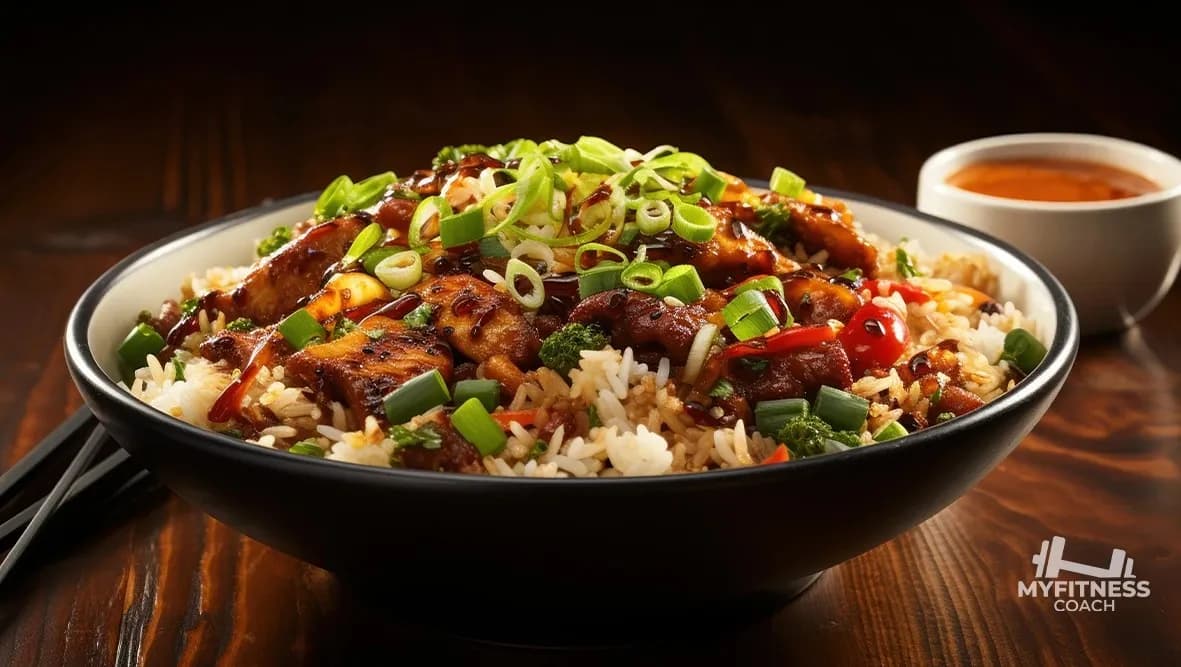
You scoop rice into a bowl, pile on chicken and a drizzle of sauce, and then you pause with your fork halfway to your mouth, wondering what you just built. That pause is the whole reason this guide exists. How many calories are in a rice bowl comes down to three things: the type of rice, how much of it you actually scooped, and everything sitting on top of it.
A plain cup of cooked white rice runs about 205 calories. Add chicken, sauce, cheese, or beans, and a "rice bowl" can land anywhere from 300 to over 900 calories. In 2026, rice bowls are one of the most logged meals in fitness apps, which is exactly why the vague answers online don't cut it anymore. I track meals for a living, and the rice itself is rarely the problem. It's almost always the extras.
Quick answer: a plain bowl of white rice (1 cup cooked) has about 205 calories. A loaded chicken and rice bowl with sauce and veggies typically runs 400 to 650 calories, and a fast-casual bowl like Chipotle can reach 600 to 900+ calories depending on what you pick.
Table of Contents
Subscribe to our newslettter
What Actually Determines Rice Bowl Calories
A rice bowl's calorie count depends on the rice type, the cooked portion size, and every topping added after the rice goes in. Plain rice sets the baseline; sauces, oils, cheese, and protein choices usually add more calories than the rice itself.
Most articles stop at "rice has calories." That's not that helpful when you're standing over an actual bowl. In my experience helping people log meals, the rice is the easy part. The sauce someone doesn't measure is where the real number hides.
A rice bowl, for the record, just means a portion of cooked rice served in a bowl rather than wrapped or plated, usually topped with a protein, vegetables, and a sauce. That's it. No mystery.
Calories in Plain Rice by Type
One cup of plain cooked white rice has about 205 calories, according to USDA FoodData Central . Brown rice runs slightly higher, near 215 to 216 calories a cup, but it also brings more fiber to the table. Basmati and jasmine sit close to white rice.
Here's the breakdown for a standard 1-cup cooked serving:
Some people argue brown rice is barely worth the switch since the calorie gap is small. That's fair up to a point. But the fiber difference matters more for staying full than the ten-calorie gap ever will.
Shareable line: The rice in your bowl is rarely the reason your calories got out of hand. The sauce usually is.
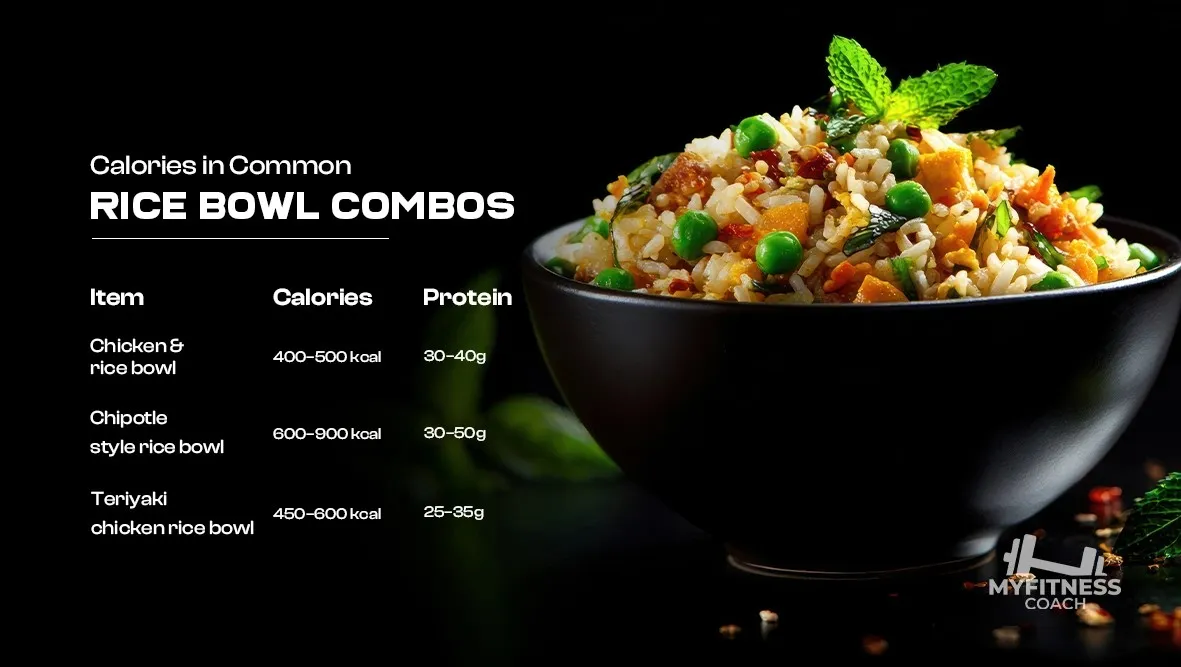
Calories in Common Rice Bowl Combos
| Item | Calories | Protein |
|---|---|---|
| Chicken & rice bowl | 400-550 kcal | 30-40 g |
| Chipotle style rice bowl | 800-900 kcal | 30-50 g |
| Teriyaki chicken rice bowl | 450-600 kcal | 25-35 g |
A chicken and rice bowl with vegetables and a light sauce typically lands between 400 and 650 calories per serving. Fast-casual versions like Chipotle or teriyaki bowls climb higher, often 600 to 900+ calories once cheese, extra rice, or creamy sauces get added.
This is the section most calorie sites skip. They'll tell you rice is 200 calories and stop there, which doesn't match how anyone actually eats a rice bowl. Here's a real-world combo table:
A Chipotle rice bowl skips the tortilla compared to a burrito, which saves roughly 300 calories on its own. But here's the thing: double rice, queso, and sour cream can quietly erase that savings in about four bites.
Why Your Bowl Size Changes the Math
Bowl size and packing density change your calorie count more than most people realize, since "one bowl" isn't a standardized measurement anywhere. A loosely filled cup of rice and a tightly packed one can differ by 30 or more calories before a single topping goes on.
Nobody's kitchen bowl matches a lab measuring cup. A cereal bowl might hold 3/4 cup of rice. A big ramen-style bowl can hold two full cups without looking overloaded.
And it gets better: restaurants almost never use a standard scoop, either. A "rice bowl" at one counter can weigh 150 grams and 250 grams at the place next door.
From my experience logging meals with MyFitnessCoach users, the single biggest fix isn't a diet change. It's weighing your bowl once with a kitchen scale so you actually know what "your bowl" means going forward.
Quick, plain-English answer: a small bowl of rice is roughly one loosely packed cup; a large one can hold two cups or more, and that alone can double your calorie count before toppings.
Is a Rice Bowl Good for Weight Loss?
Rice bowls can absolutely fit a weight loss plan, since the calorie count depends far more on portion size and toppings than on rice being inherently fattening. The building-block format also makes portion control easier than a wrapped burrito or a plated dish.
The frustration a lot of people feel here is real. Rice gets blamed for weight gain when the actual issue is usually a bowl loaded with extra rice, cheese, and creamy sauce.
Some people argue rice bowls are just a carb bomb dressed up as a healthy meal. There's a grain of truth in that when the bowl is mostly rice with barely any protein or vegetables. The fix isn't cutting rice. It's rebalancing what surrounds it.
A well-built bowl with a measured cup of rice, a lean protein, and a vegetable-heavy topping usually lands in a very reasonable calorie range for lunch or dinner.
How to Build a Lower-Calorie Rice Bowl
Building a lower-calorie rice bowl mostly comes down to measuring your rice, choosing lean proteins, and treating sauce as a topping instead of a base layer. None of these swaps require giving up the format you already like.
- Measure a level cup of rice instead of eyeballing a scoop from the pot.
- Choose grilled or baked protein over fried versions to cut 100+ calories fast.
- Ask for sauce on the side, or add just a spoonful instead of a ladle.
- Swap half the rice for cauliflower rice to add volume without many extra calories.
- Load up on non-starchy vegetables, since they add almost no calories but real fullness.
- Skip the double-rice option at fast-casual counters unless you're genuinely still hungry.
- Add beans or extra chicken for protein instead of extra cheese.
Bold callout: Protein and vegetables are what make a rice bowl filling. Rice and sauce are what make it heavy.
Tracking Rice Bowl Calories Without the Guesswork
The most reliable way to track a rice bowl's calories is logging the rice and each topping separately rather than guessing at a combined total. Most calorie mistakes with rice bowls come from lumping everything into one rough estimate.
Homemade bowls are the easy case, since you control every ingredient and can log measured amounts directly. Restaurant bowls are trickier, because the same menu item can vary by a hundred calories or more between locations.
This is where a food scan and log feature, like the one in MyFitnessCoach, earns its keep. Snap the bowl before you eat, log the rice separately from the protein and sauce, and the running total stops being a guess.
Next step: if you're building rice bowls often, it's worth checking our guide on rice with chicken calorie breakdowns for exact numbers by portion, since a lot of the confusion around rice bowls starts with the chicken side, not the rice.
.webp)
Reviewed by [Teresa Fung, ScD, RD], Registered Dietitian — Last updated: July 2026
Frequently Asked Questions
Similar Articles
Stay informed with these similar articles.
MyFitnessCoach
October 18, 2023
What Does Body Goals Mean? A Path to a Healthy Lifestyle
In the world we live in now, lots of people talk about "body goals," which means having a body that's seen as perfect. On social media, in magazines, and on TV, we see lots of pictures of people with what seems like perfect bodies, which makes us feel like we have to look like them. But the real meaning of "body goals" is more than just looking good. It's about taking care of your whole self, not just how you look. In this article, we will discuss what does body goals actually mean and how you can achieve your body goals. Let’s get started:
.webp&w=3840&q=75)
MyFitnessCoach
September 5, 2023
How Much Protein in an Egg | The Nutritional Power
Eggs have long been a breakfast favorite for many, and for good reason. They're not only delicious but also packed with essential nutrients, making them a versatile and nutritious addition to your diet. One of the most common questions about eggs is, "How much protein is in an egg?" In this comprehensive guide, we'll delve into the world of eggs and explore their protein content, nutritional benefits, and how they can contribute to a balanced diet.
MyFitnessCoach
May 18, 2023
Fitness Guide: How Do I Start A Weight Loss Journey
Ready to start on a life-changing weight-loss journey? Congratulations for taking the first step towards being a better and happier version of yourself! Starting off a weight-loss journey may be both satisfying and stressful. With so much information available, having a well-defined plan and trusted assistance in achieving your goals is important. This article will help you start your weight-loss journey and achieve the results you desire.