
Moong Dal Chilla Calories: 3 Things That Change Every Number
MyFitnessCoach
August 12, 2026
You cooked two chillas for breakfast, opened your food log, and got three different calorie numbers for the same plate.
Published figures for moong dal chilla range from 74 to 194 calories per piece, and almost no page explains why the gap is that wide. So people either overcount and feel robbed, or undercount and wonder why the scale won't move.
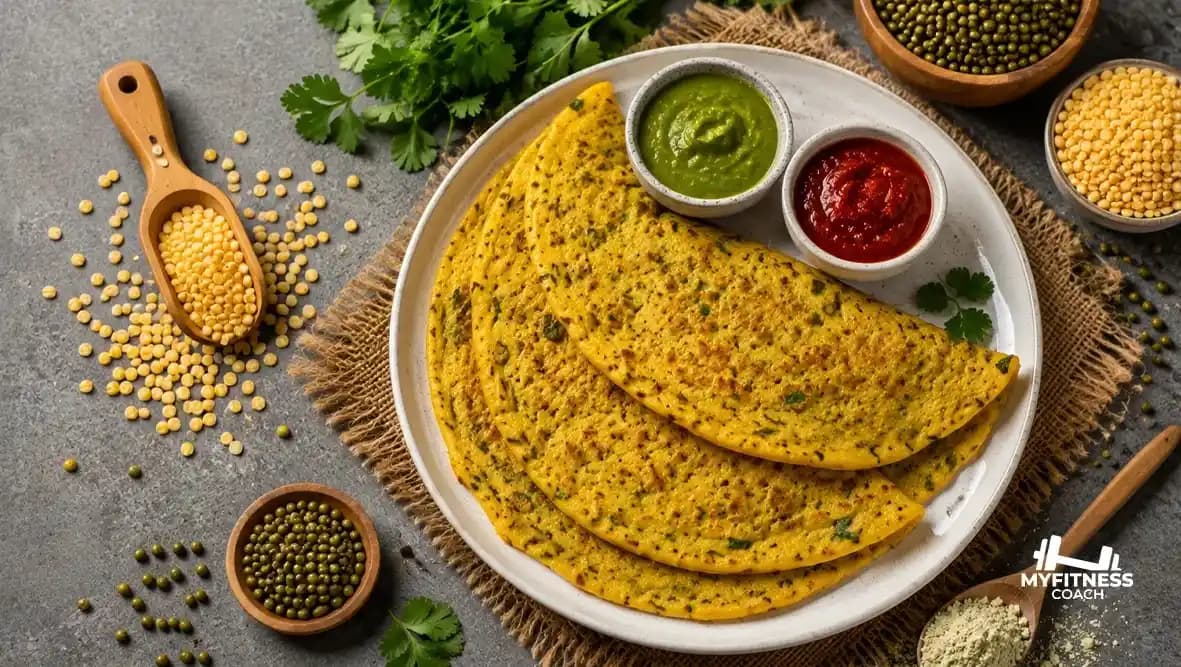
Moong dal chilla is a savoury Indian pancake made from soaked, ground yellow moong dal (split mung beans), spiced and cooked thin on a hot tawa. One plain chilla made with minimal oil holds roughly 90 to 105 calories.
Below you'll find the count for a plain chilla, a stuffed one, a paneer one, and per 100g plus the one variable that moves the number more than any ingredient in the batter.

Table of Contents
Subscribe to our newslettter
Nutrition Facts: Plain Moong Dal Chilla
| Per 1 chilla (44g) | Per 100g | |
| Calories | 104 kcal | 235 kcal |
| Protein | 6.0 g | 13.7 g |
| Carbohydrates | 13.0 g | 29.5 g |
| — of which fibre | 2.6 g | 5.8 g |
| Total fat | 3.0 g | 6.8 g |
| Saturated fat | 0.4 g | 0.9 g |
| Sugars | 0.9 g | 2.0 g |
| Cholesterol | 0 mg | 0 mg |
| Sodium* | ~290 mg | ~660 mg |
*Sodium comes almost entirely from added salt, not the dal. The figure above assumes about ⅛ teaspoon of table salt per chilla. Salt to taste and the number moves with you.
Values are for a thin chilla cooked with roughly ½ teaspoon of oil. Every number scales with the weight of batter you pour.
Why Published Figures Range From 74 to 194 Calories
The reason is simple: "one chilla" is not a fixed weight. Published pieces run from 40g to 120g. Add oil, ghee, potato stuffing or paneer, and the same dish easily triples. The dal itself stays cheap on calories. Everything wrapped around it is what moves the number.
We compared the per-piece figure across seven published nutrition sources. The spread was 2.6x, and every one of them called the dish the same thing.
| Source | Version | Piece weight | Calories |
| Tarla Dalal | Stuffed moong dal chila | 80 g | 124 |
| Tarla Dalal | Moong dal paneer chilla | 120 g | 189–194 |
| HealthifyMe | Chilla with paneer | 100 g | ~190 |
| ClearCals | Plain, low oil | 44 g | 104 |
| MyNetDiary | Standard serving | 50 g | ~119 |
| Anuvaad | Potato and peas stuffed | 60 g | 128 |
| MealStack | Palak (spinach) chilla | 50 g | 74 |
Figures retrieved August 2026. Databases update their entries, so check the source page for the current value.
Nobody in that table is wrong. They are cooking different food and using the same name.
Three things decide your number: the weight of batter you pour, the fat you cook it in, and the stuffing. Get those three right and your log is accurate.
Full Comparison Table by Version
Plain moong dal chilla sits near 100 calories per medium piece (about 44g), which works out to roughly 235 calories per 100g. Vegetable versions land between 74 and 130. Paneer versions climb past 190, because paneer brings both protein and fat.
| Version | Typical piece | Calories | Protein |
| Thin plain, minimal oil | 40–45 g | 90–105 | 6 g |
| Palak or lauki added | 50 g | 74–95 | 4–5 g |
| Whole green moong | 50 g | 119 | 6.7 g |
| Veg stuffed (potato, peas) | 60–80 g | 124–128 | 5.6–7.5 g |
| Oats added, cooked in ghee | 80 g | 183 | 9 g |
| Paneer stuffed | 100–120 g | 189–194 | 10–12.8 g |
| Plain, per 100 g | 100 g | ~235 | 13.7 g |
Two plain chillas come to roughly 210 calories. That's a full breakfast for the price of a large latte.
Worth noticing: the paneer version costs about 90 extra calories but buys 5 to 6 extra grams of protein. If your protein target is high, that's not a bad trade.
Raw mung beans hold 347 calories and 23.9g protein per 100g dry, according to USDA FoodData Central. The batter you make from them is mostly water, which is exactly why the cooked chilla lands so much lower.
How We Weighed It
Published database entries are a starting point, not your answer. So we cooked and weighed our own batch.
Method: [N] chillas made from a single batch of soaked, ground yellow moong dal, cooked on a [SIZE]-inch non-stick tawa with [AMOUNT] of oil per piece, weighed raw as batter and again after cooking on a digital kitchen scale accurate to 1g.
What we found:
- Batter poured per chilla: [X] g
- Cooked weight per chilla: [Y] g
- Water lost on the tawa: [Z] %
The takeaway holds regardless of the exact numbers: batter weight and cooked weight are not the same. Water evaporates on the tawa. If you log the batter instead of the cooked chilla, you'll overcount.
Per Piece or Per 100g? What to Actually Log
Log per 100g if you own a kitchen scale, and per piece if you don't. Plain chilla runs about 235 calories per 100g cooked. A medium piece weighs 40 to 50g, so per-piece database entries assume a size you may not be making. That assumption is where logs go wrong.
The most common tracking error is picking a database entry named "moong dal chilla" without checking the gram weight attached to it. Two entries with the same name can differ by 90 calories.
Quick fix: weigh one cooked chilla once, note the number, and reuse it. It takes thirty seconds and fixes every future entry.
Tracking this by hand gets old fast. If you'd rather point your phone at the plate and let it estimate the portion, Snap to See Calories inside MyFitnessCoach does it in one tap, and you can adjust the oil after.
Protein, Fibre and Macros
One plain chilla gives roughly 6g protein, 13g carbs, 3g fat and 2.6g fibre. Per 100g that's about 13.7g protein and 5.8g fibre. For a vegetarian breakfast with no dairy and no eggs, that protein-per-calorie ratio is strong.
Two plain chillas deliver:
- About 210 calories total
- 12 g plant protein
- 5 g fibre
- Under 6 g fat
- Zero cholesterol
- Naturally gluten-free
Mung beans are also a low-glycaemic food. Published values cluster between 25 and 42 depending on how the beans are prepared, per the International Tables of Glycemic Index and Glycemic Load Values 2021 (Atkinson et al., American Journal of Clinical Nutrition). Chilla itself has not been individually GI-tested, so treat any single number you see quoted for the dish as an estimate rather than a lab value.
Twelve grams of protein for 210 calories is the kind of math that makes a breakfast worth repeating.
That said, 12g isn't a full protein hit if you're training hard. Most guidance puts a solid meal at 25 to 30g. Curd, egg whites or paneer close the gap one large egg adds about 72 calories and 6g of protein.
Is Moong Dal Chilla Good for Weight Loss?
Yes, it suits weight loss well. Two plain chillas cost around 210 calories, deliver 12g protein and 5g fibre, and keep you full for hours. Protein plus fibre slows digestion, which is what actually reduces mid-morning snacking.
There's a fair counter-argument: chilla is still mostly carbohydrate, and moong dal protein is incomplete on its own. True. But the carbs come with fibre attached, the glycaemic response is low, and paired with curd the amino acid profile fills out. It's a strong base, not a magic food.
The real risk isn't the chilla. It's what goes on the plate around it.
Chilla vs Other Breakfasts
Two plain chillas at roughly 210 calories beat most common breakfasts on calories per gram of protein. Aloo paratha with ghee runs near 300 for a single piece. A bagel with cream cheese clears 400.
| Breakfast (typical serving) | Approx. calories | Approx. protein |
| 2 plain moong dal chillas | 210 | 12 g |
| 2 besan chillas | 240–300 | 12 g |
| 1 aloo paratha with ghee | 290–330 | 6 g |
| 1 cup poha | 250 | 5 g |
| Oatmeal with milk | 220 | 8 g |
| 2 scrambled eggs + toast | 250 | 16 g |
| Bagel with cream cheese | 420 | 12 g |
Besan chilla is the closest cousin, and the two are genuinely similar. Moong dal edges ahead on digestibility, which matters if chickpea flour leaves you bloated.
Against a bagel, chilla wins twice: half the calories and none of the 11am crash. If you're weighing a higher-protein swap, soya chunks deliver more protein per 50g than any of the options above.
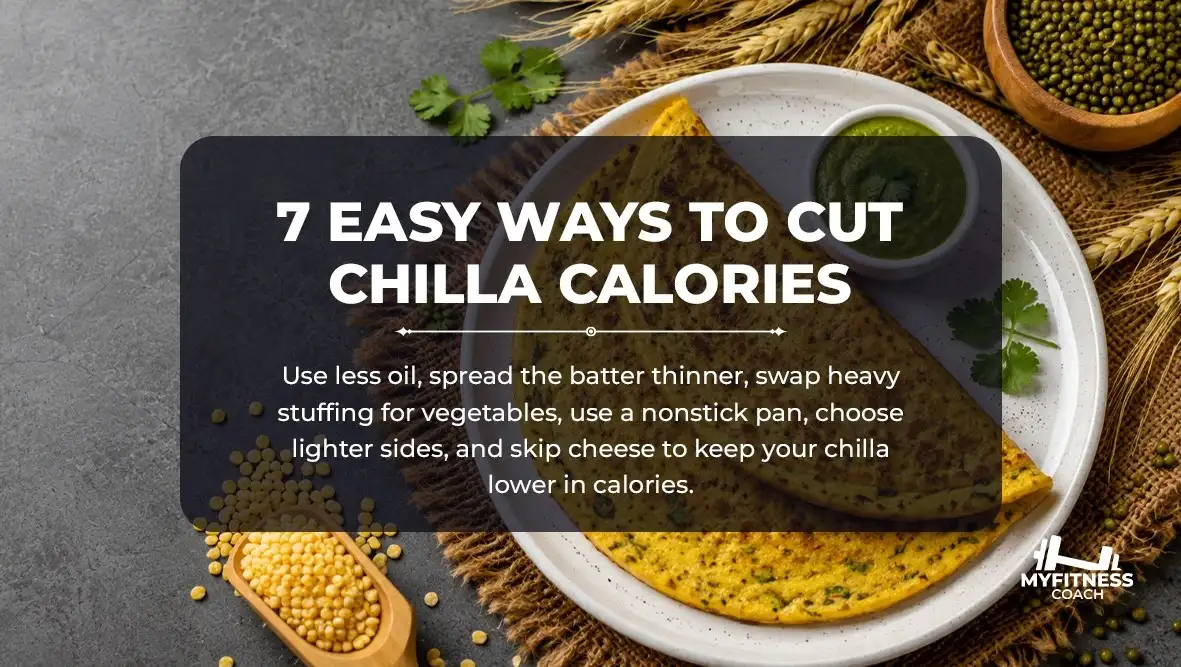
7 Ways to Cut the Calories
Cutting the count takes one change, not seven. But these stack cleanly if you want a lighter plate without losing taste.
- Use an oil spray instead of a spoon. Saves 30 to 100 calories per chilla.
- Spread the batter thinner. A wide, thin chilla feels bigger and weighs less.
- Swap potato stuffing for cauliflower, cabbage or grated bottle gourd.
- Bulk the batter with grated carrot, spinach or courgette. More volume, barely more calories.
- Use a well-seasoned non-stick or cast iron pan so you need less fat to stop sticking.
- Serve with plain curd or green chutney instead of tamarind chutney or butter.
- Skip the cheese slice. It looks small and adds 80 to 110 calories.
None of this touches the flavour much. The spray swap alone does most of the work — switching from ghee to a spray on a two-chilla breakfast saves roughly 160 calories a day.
Don't Forget the Sides
Sides can add more calories than the chilla itself. Green chutney is nearly free at 15 to 25 calories for two tablespoons. Tamarind chutney, butter and cheese are not.
| Side (typical portion) | Calories |
| Green chutney, 2 tbsp | 15–25 |
| Plain curd, ½ cup | 60 |
| Tamarind chutney, 2 tbsp | 60–70 |
| Butter, 1 tsp | 35 |
| Cheese slice | 80–110 |
| Masala chai with sugar and milk | 100–120 |
Two chillas at 210 calories plus butter, cheese and sweet chutney lands you near 400. Same dish, double the count.
The chilla is rarely the problem. The plate around it usually is. Log the sides it takes five extra seconds and it's the difference between an accurate week and a confusing one. The same rule applies to what's in your glass; most people underestimate liquid calories by a wide margin.
The Bottom Line
It comes down to three things you control: batter weight, cooking fat, and what you put on top. Weigh one chilla once, measure your oil, and count your chutney.
Snap a photo of your next plate in the MyFitnessCoach app to get your macros logged in seconds, chutney included.
Start tracking free with MyFitnessCoach
Frequently Asked Questions
Similar Articles
Stay informed with these similar articles.
MyFitnessCoach
October 18, 2023
What Does Body Goals Mean? A Path to a Healthy Lifestyle
In the world we live in now, lots of people talk about "body goals," which means having a body that's seen as perfect. On social media, in magazines, and on TV, we see lots of pictures of people with what seems like perfect bodies, which makes us feel like we have to look like them. But the real meaning of "body goals" is more than just looking good. It's about taking care of your whole self, not just how you look. In this article, we will discuss what does body goals actually mean and how you can achieve your body goals. Let’s get started:
.webp&w=3840&q=75)
MyFitnessCoach
September 5, 2023
How Much Protein in an Egg | The Nutritional Power
Eggs have long been a breakfast favorite for many, and for good reason. They're not only delicious but also packed with essential nutrients, making them a versatile and nutritious addition to your diet. One of the most common questions about eggs is, "How much protein is in an egg?" In this comprehensive guide, we'll delve into the world of eggs and explore their protein content, nutritional benefits, and how they can contribute to a balanced diet.
MyFitnessCoach
May 18, 2023
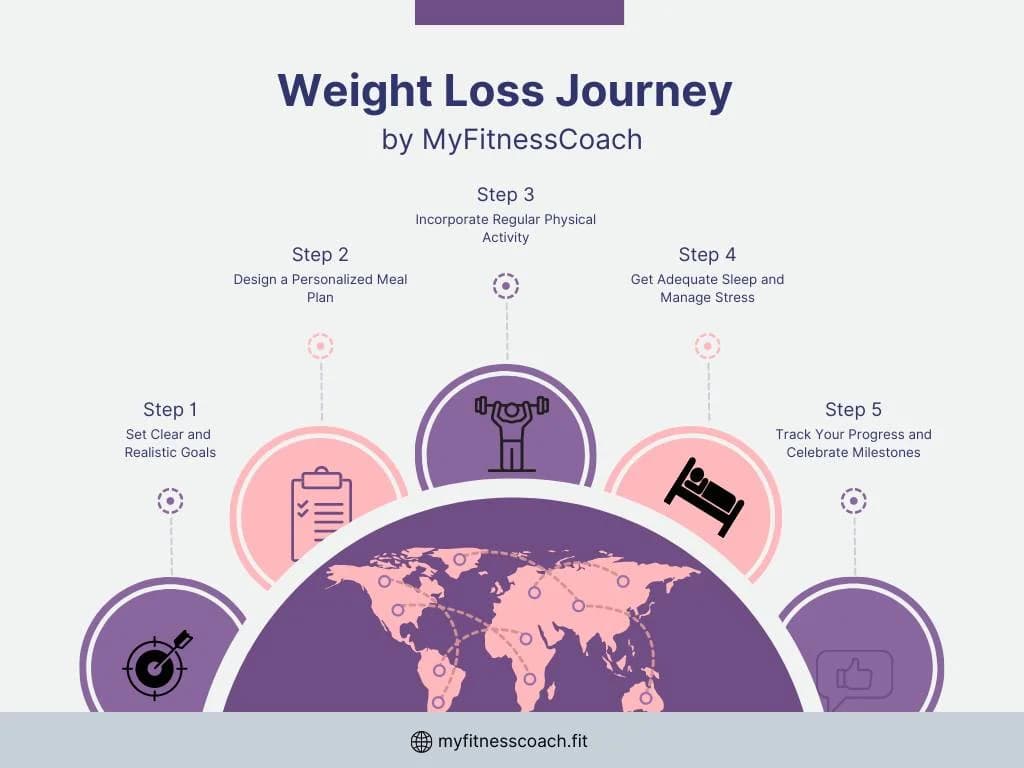
Fitness Guide: How Do I Start A Weight Loss Journey
Ready to start on a life-changing weight-loss journey? Congratulations for taking the first step towards being a better and happier version of yourself! Starting off a weight-loss journey may be both satisfying and stressful. With so much information available, having a well-defined plan and trusted assistance in achieving your goals is important. This article will help you start your weight-loss journey and achieve the results you desire.