
50 gm Soya Chunks Protein: Why Every Website Gets It Wrong
MyFitnessCoach
August 4, 2026
50 grams of dry soya chunks provides 23–27 grams of complete protein and 165–175 calories. The spread is real, not sloppy reporting it comes from where the soy flour was processed. Rehydrated, that same 50 grams becomes roughly 150 grams and the protein does not change.
You weigh a small pile of dry soya chunks, open three tabs, and get three different numbers. One says 25 grams of protein. Another says 27. A third gives a calorie figure 40 kcal off the first.
There is a reason for that, and once you see it the numbers stop wobbling.
This guide covers the full macro table, why published figures disagree, the dry-to-cooked conversion that ruins more food logs than any other single mistake, how soya chunks compare to chicken and whey, and the leucine detail almost nobody mentions.

Table of Contents
Subscribe to our newslettter
What Are Soya Chunks?
Soya chunks are textured vegetable protein made from defatted soy flour the meal left over after soybean oil is pressed out. The flour is pushed through an extruder until it forms a dry, chewy, meat-like nugget that rehydrates in hot water.
The naming changes by market, which is the first reason nutrition figures disagree:
| Region | Common name |
| India, Pakistan, Bangladesh | Soya chunks, meal maker, soya badi, nutri nuggets |
| United States, Canada | Textured vegetable protein (TVP), soy curls* |
| United Kingdom, Europe | Textured soy protein, soya mince, soya pieces |
*Soy curls are not the same product. They are made from whole soybeans rather than defatted flour, so they carry more fat and less protein per gram. Do not transfer these numbers to them.
The test that settles it: if the ingredient list reads "defatted soy flour" and nothing else, the figures on this page apply.
50 gm Soya Chunks Protein and Calories: The Full Macro Table
A 50 gram dry serving of soya chunks provides 23–27 grams of complete protein and 165–175 calories. Carbohydrates come to 15–17 grams, of which 6–8 grams is fibre. Fat is under half a gram. Roughly 60% of the calories arrive as protein, which very few foods manage.
| Nutrient | Per 50 g dry | Per 100 g dry |
| Calories | 165–175 kcal | 330–345 kcal |
| Protein | 23–27 g | 47–52 g |
| Carbohydrates | 15–17 g | 30–33 g |
| Fibre | 6–8 g | 13–16 g |
| Fat | 0.2–0.5 g | 0.5–1 g |
| Iron | 4–5 mg | 8–9 mg |
| Calcium | 120–170 mg | 240–340 mg |
| Potassium | ~1,200 mg | ~2,400 mg |
Where these numbers come from. USDA FoodData Central lists defatted soy flour at approximately 330 kcal and 47 g protein per 100 g. Indian soya chunk packets typically declare 345 kcal and 52 g protein per 100 g. Both are accurate for what they measured — see the next section for why they differ. The ICMR-NIN Indian Food Composition Tables are the reference to check for region-specific values.
At the midpoint, you get about 15 grams of protein per 100 calories eaten. Half a cup of dry soya chunks carries more protein than three whole eggs, for fewer calories.
Why Every Source Gives a Different Protein Number
Protein in 50 gm of soya chunks ranges from 23 to 27 grams because defatted soy flour leaves the press at anywhere between 47% and 54% protein by weight. Processing efficiency, the soybean variety, and small additions of starch or wheat during extrusion all shift the final figure. Two bags on the same shelf can differ by 2–3 grams per serving.
| Source | Protein per 50 g dry | Calories per 50 g dry |
| USDA, defatted soy flour | ~23.5 g | ~165 kcal |
| Typical Indian soya chunk label | 26 g | 172 kcal |
| US TVP (retail brands) | 24–26 g | 165–180 kcal |
| High-protein soy nugget | 27 g | 175 kcal |
So when one article says 25 and another says 27, both are likely right about the product in front of them.
The ten-second fix: turn the bag over. Find the protein grams and the serving size in grams. Divide protein by serving size, then multiply by 50. That is your real number, and it beats any article on the internet, including this one.
Brand variation is the smaller problem. The bigger one is water.
Dry vs Cooked Soya Chunks: The Mistake That Wrecks Your Tracking
Fifty grams of dry soya chunks becomes roughly 150 grams once soaked or boiled, because the chunks absorb about 2.5 to 3 times their weight in water. The calories and protein do not change — only the weight does. If you log 50 grams of the cooked version, you record around 57 kcal and 8.5 grams of protein, which is a third of what you actually ate.
| What you weigh | Calories | Protein |
| 50 g dry (before soaking) | ~172 kcal | ~26 g |
| 50 g cooked (after soaking) | ~57 kcal | ~8.5 g |
| 150 g cooked (= 50 g dry) | ~172 kcal | ~26 g |
Recipes and meal plans almost always mean dry weight. When a plan says "50 g soya chunks," weigh it straight from the bag.
If you cook without a scale, the volume equivalents are:
- 50 g dry ≈ ⅔ cup dry, loosely packed
- 50 g dry, once rehydrated ≈ 1¼ to 1½ cups
- 1 cup dry ≈ 75 g ≈ 258 kcal and 39 g protein
Cup measures drift by 10–15 grams depending on chunk size, so a cheap kitchen scale earns its keep on this food faster than most.
This is the single most common tracking error with soya chunks, and it is a data-entry problem rather than a nutrition one. Save the dry weight once as a custom entry in your food log in you can store a soya chunk recipe with its dry-weight macros, so every future curry, bowl or taco filling logs in one tap and the water never enters the calculation again.
Soya Chunks vs Chicken, Eggs and Whey
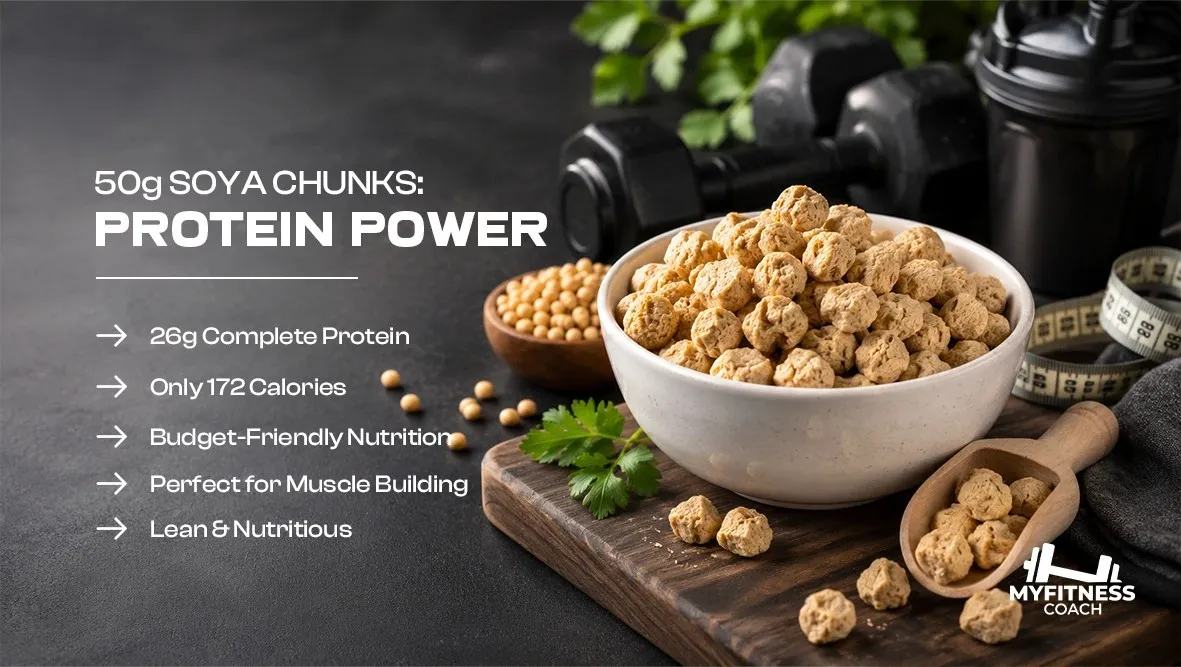
Fifty grams of dry soya chunks delivers 26 grams of protein for 172 calories, which lands close to 100 grams of cooked chicken breast at 31 grams for 165 calories and adds 6–8 grams of fibre that chicken has none of.
| Food | Serving | Calories | Protein | Fibre |
| Soya chunks (dry) | 50 g | ~172 kcal | ~26 g | 6–8 g |
| Chicken breast (cooked) | 100 g | ~165 kcal | ~31 g | 0 g |
| Large eggs | 3 whole | ~216 kcal | ~19 g | 0 g |
| Whey protein | 1 scoop (30 g) | ~120 kcal | ~24 g | 0 g |
| Firm tofu | 100 g | ~144 kcal | ~17 g | ~2 g |
| Cooked lentils | 1 cup (198 g) | ~230 kcal | ~18 g | ~15 g |
On protein quality. Soy protein isolate scores 1.00 on the PDCAAS scale, the maximum, matching whey and casein. Soya chunks are made from defatted soy flour rather than isolate, so they score slightly lower around 0.9 which still places them among the highest-quality plant proteins available and well ahead of most legumes and grains. On cost. Soya chunks are among the cheapest complete proteins sold anywhere. In India they typically run ₹100–₹200 per kilogram, putting a 26-gram protein serving at roughly ₹5–₹10. In US and UK stores, TVP generally sits around $4–$6 per pound, which works out to well under a dollar per serving. Neither chicken nor whey comes close on a cost-per-gram-of-protein basis.
Is 50 Grams of Soya Chunks Enough Protein for One Meal?
For most adults, yes. Muscle protein synthesis responds best to roughly 25–30 grams of quality protein per sitting, and 50 grams of dry soya chunks sits inside that window at around 26 grams.
The leucine detail almost nobody mentions. Muscle protein synthesis is triggered by leucine, and the threshold commonly cited in research is about 2.5–3 grams per meal. Soy protein is roughly 7.5–8% leucine, so a 26-gram serving supplies about 2 grams near the threshold but not comfortably above it. Whey, at 10–11% leucine, clears it with a smaller serving.
What that means in practice, without overcomplicating it:
- If you are training hard and soya chunks are the whole protein source for a meal, 60–75 grams dry (31–39 g protein) sits more comfortably above the threshold than 50 grams
- Pairing soya chunks with dairy, eggs or a grain in the same meal also closes the gap
- Total daily protein still matters far more than any single meal's leucine content
A workable daily pattern for someone training regularly:
- Breakfast — eggs, yoghurt or a shake, 25–30 g
- Lunch — 50–60 g dry soya chunks in a curry or bowl, 26–31 g
- Dinner — beans, tofu, fish or poultry, 30 g
- Snack — paneer, cottage cheese or nuts, 15–20 g
Some people argue whey is the better post-workout choice, and on absorption speed and leucine density they are right. But total daily intake drives long-term muscle gain far more than timing does, and soya chunks make hitting that total cheap. Both belong in the same diet. If you're weighing up whey protein after a weight training session, soya chunks work just as well as a whole-food alternative.
Does Soaking or Boiling Reduce the Protein?
No. Soaking or boiling soya chunks does not destroy protein. The per-100-gram figure drops from around 52 grams to roughly 17–20 grams purely because water has tripled the weight. The protein in the serving is unchanged: 50 grams dry contains about 26 grams of protein whether you eat it soaked, boiled, fried or simmered in curry.
Does discarding the soaking water cost you anything? A little. You lose small amounts of water-soluble B vitamins and minerals, plus a fraction of the oligosaccharides that cause bloating in some people. Protein and calories stay put, because neither dissolves out in meaningful quantity. For most people the digestive benefit outweighs the trace nutrient loss.
How to prepare soya chunks properly
- Cover with hot water and leave for 15–20 minutes
- Drain, then squeeze firmly by hand or press between paper towels
- Marinate now, while they are dry and will absorb flavour
- Cook as you would minced meat
Squeezing matters more than people expect. Waterlogged chunks dilute sauces and turn mushy. Properly squeezed chunks behave like a sponge whatever you marinate them in is what they taste like.
Who Should Be Cautious With Soya Chunks
Most healthy adults tolerate 50–100 grams of dry soya chunks daily without issue. Three groups should take more care:
- People on thyroid medication. Soy can interfere with levothyroxine absorption. Standard guidance is to separate soy intake from the dose by around four hours.
- Anyone with a diagnosed soy allergy. Avoid entirely.
- People with low habitual fibre intake. Six to eight grams arriving suddenly can cause bloating. Start at 25 grams dry and build up over a week or two.
On the testosterone question. Meta-analyses of clinical trials in men have found no meaningful effect of soy protein or isoflavones on testosterone, free testosterone, or estradiol at normal dietary intakes. The concern originates largely from isolated case reports involving extreme consumption.
If you have a thyroid condition, kidney disease, or take regular medication, discuss this with your doctor or a registered dietitian before making soya chunks a daily habit. This article is general nutrition information, not medical advice for your situation.
Three Ways to Eat 50 Grams
Fifty grams of dry soya chunks fits into most savoury dishes that would otherwise use minced meat. Each option below lands between 240 and 420 calories for a full plate. Pair it with a session targeting best exercises for core strength and you've got a complete training-plus-nutrition day.
1. Curry
Simmer squeezed chunks in an onion-tomato base with a teaspoon of oil, and finish with garam masala. Roughly 26 g protein and 320 kcal per serving, less if you cut the oil.
2. Protein bowl
Marinate in soy sauce, garlic and chilli, roast at 200°C (400°F) for 20 minutes until the edges crisp, then serve over rice with vegetables. About 26 g protein from the chunks, 410 kcal for the assembled bowl.
3. Taco or keema filling
Rehydrate, squeeze, then brown in a pan with spices, tomato paste and a splash of stock. Roughly 26 g protein and 240 kcal before the tortillas or bread.
Batch cooking removes the main reason people abandon this food, which is the soaking step. Cook a week's worth on Sunday, portion it out, and the numbers you started with hold steady across every meal.
The Bottom Line
Weigh dry, check your own bag's label once, and 50 gm soya chunks protein and calories stops being a guessing game. For most people the working figures are 26 grams of protein and 172 calories per 50 grams dry, becoming roughly 150 grams on the plate.
The only habit that matters here is logging the dry weight rather than the cooked one. Save one soya chunk recipe with its dry-weight macros in MyFitnessCoach, and every meal after that logs in seconds — no conversion, no water, no second-guessing the label.
Frequently Asked Questions
Similar Articles
Stay informed with these similar articles.
MyFitnessCoach
October 18, 2023
What Does Body Goals Mean? A Path to a Healthy Lifestyle
In the world we live in now, lots of people talk about "body goals," which means having a body that's seen as perfect. On social media, in magazines, and on TV, we see lots of pictures of people with what seems like perfect bodies, which makes us feel like we have to look like them. But the real meaning of "body goals" is more than just looking good. It's about taking care of your whole self, not just how you look. In this article, we will discuss what does body goals actually mean and how you can achieve your body goals. Let’s get started:
.webp&w=3840&q=75)
MyFitnessCoach
September 5, 2023
How Much Protein in an Egg | The Nutritional Power
Eggs have long been a breakfast favorite for many, and for good reason. They're not only delicious but also packed with essential nutrients, making them a versatile and nutritious addition to your diet. One of the most common questions about eggs is, "How much protein is in an egg?" In this comprehensive guide, we'll delve into the world of eggs and explore their protein content, nutritional benefits, and how they can contribute to a balanced diet.
MyFitnessCoach
May 18, 2023
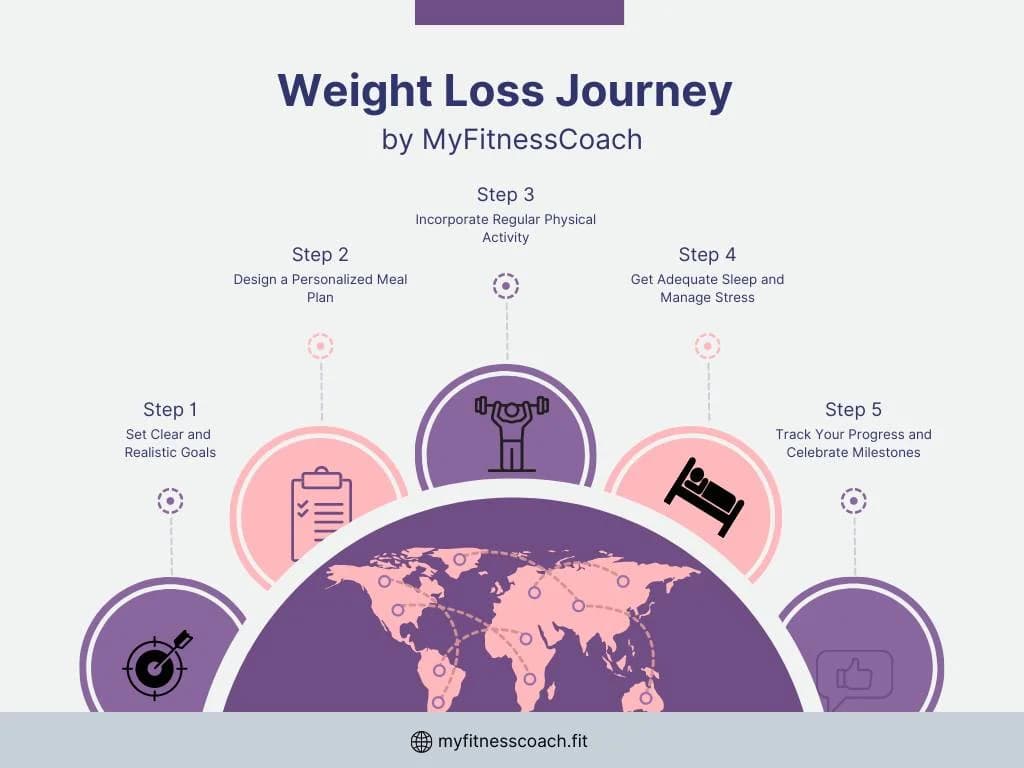
Fitness Guide: How Do I Start A Weight Loss Journey
Ready to start on a life-changing weight-loss journey? Congratulations for taking the first step towards being a better and happier version of yourself! Starting off a weight-loss journey may be both satisfying and stressful. With so much information available, having a well-defined plan and trusted assistance in achieving your goals is important. This article will help you start your weight-loss journey and achieve the results you desire.