
Can A Swollen Knee Be Dangerous? 6 Warning Signs Revealed
MyFitnessCoach
July 9, 2026
You got up from your desk, and one knee just looked... bigger. Maybe you twisted it playing pickup basketball last night, or maybe it swelled up for no reason you can point to. Either way, the question hits fast: can a swollen knee be dangerous, or is this just a normal ache that'll fade by Tuesday?
Here's the short answer: sometimes yes, sometimes no, and the difference usually comes down to a handful of specific signs. Doctors call this fluid buildup a knee effusion, and in 2026 it's still one of the most searched joint complaints in the country, right alongside back pain and headaches. This guide walks you through what's actually happening inside your knee, which symptoms mean "watch and wait," and which ones mean "get seen today."
I've spent years working alongside fitness and recovery programs, watching people push through knee swelling that should've sent them to a doctor, and watching others panic over swelling that was genuinely nothing. Knowing the difference protects both your joint and your peace of mind.

Table of Contents
Subscribe to our newslettter
What Exactly Is a Swollen Knee?
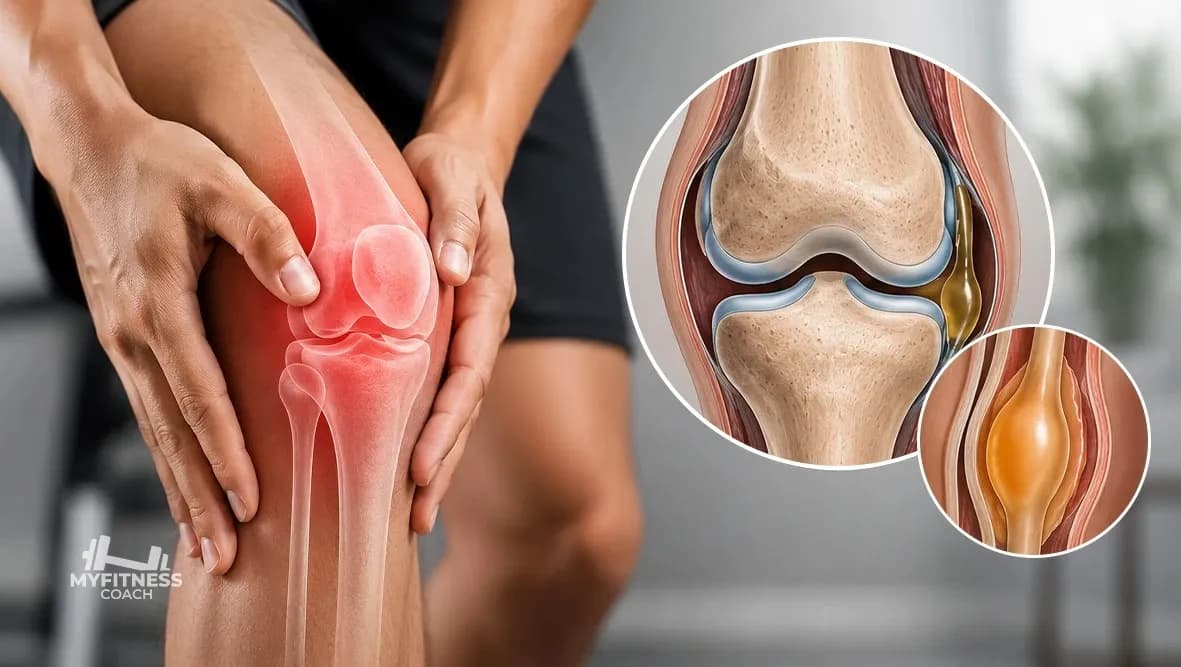
A swollen knee happens when extra fluid builds up inside or around the joint capsule, a condition doctors label knee effusion. The knee looks puffier than the other one, feels tight, and often loses some of its normal bend. It's not a diagnosis by itself. It's a signal that something inside the joint needs a closer look.
The swelling can show up in minutes after a bad twist, or creep in over weeks with no clear trigger at all. Both patterns are common, and both deserve attention, just not always the same urgency.
What Causes a Knee to Swell Up
Most knee swelling traces back to one of five categories: injury, overuse, arthritis, infection, or a crystal disease like gout. Knowing which bucket you're in changes everything about how worried you should be.
Injuries like a torn meniscus, a stretched or torn ACL, or a fracture are the most common trigger in people under 40. These usually swell fast, sometimes within an hour of the injury, and often come with bruising or a feeling that the knee might give out.
Overuse builds slower. Runners, cyclists, and anyone who spends a lot of time kneeling can irritate the tissue around the kneecap or the small fluid-filled sacs called bursae. This swelling tends to ease with rest and comes back with activity.
Arthritis, whether it's the wear-and-tear osteoarthritis type or the autoimmune rheumatoid type, causes chronic, on-and-off swelling that tends to worsen with age. Morning stiffness is a classic tell here.
Infection, known medically as septic arthritis, is the one that actually scares doctors. It's uncommon, but it's a true joint emergency. According to a StatPearls clinical review, septic arthritis strikes roughly 2 to 10 people out of every 100,000 each year, and the knee is the joint it targets most often in adults.
Gout shows up almost overnight, usually with intense pain, redness, and warmth, as uric acid crystals irritate the joint lining.
Some people argue that any knee swelling means you should stop all activity immediately. That's not quite right mild, non-painful swelling from light overuse often responds better to gentle movement and gradual loading than to total rest. The exception is swelling tied to any of the red flags below, where rest and medical evaluation come first.
Normal Swelling vs. Swelling That Signals Trouble
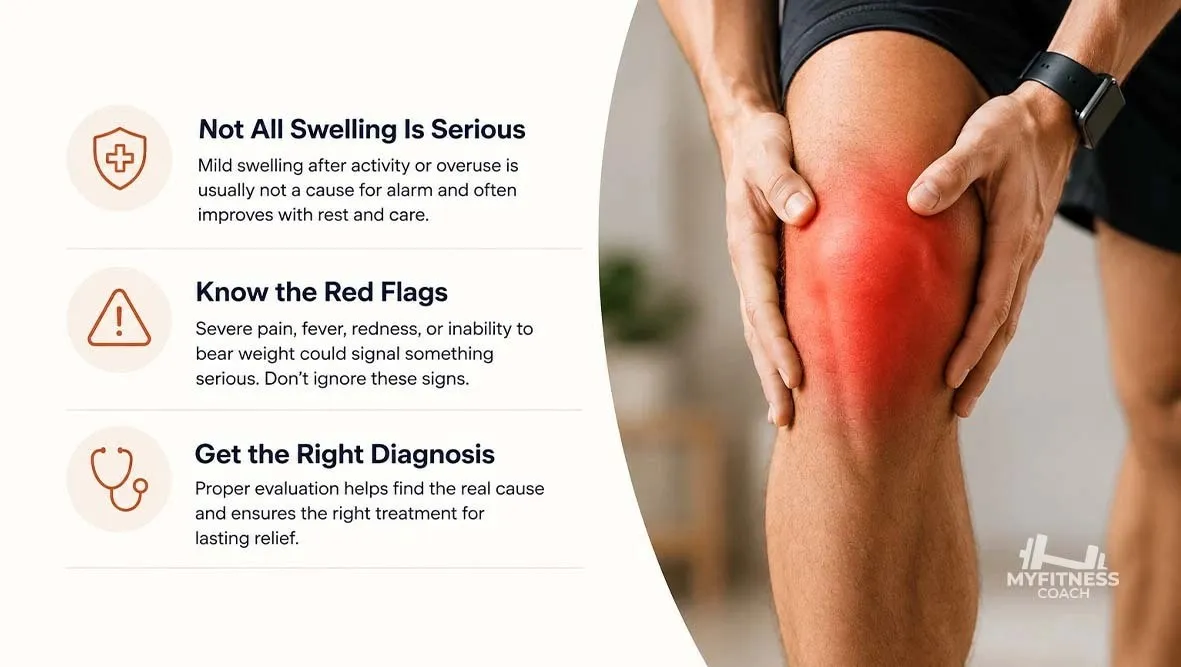
Not every puffy knee needs a same-day appointment. Here's a quick way to sort the two apart:
| Feature | Usually Fine | Needs Prompt Care |
| Onset | Gradual, after activity | Sudden, within minutes to hours |
| Pain level | Mild, manageable | Severe, or you can't bear weight |
| Warmth or redness | Slight or none | Noticeably hot, red, or discolored |
| Fever | Absent | Present, even low-grade |
| Movement | Stiff but functional | Locked, giving way, or unstable |
If your knee lands mostly in the left column, at-home care is often reasonable. If even one item lands in the right column, that's your cue to get checked.
So, Can a Swollen Knee Actually Be Dangerous?
Yes, a swollen knee can be dangerous, but only under specific conditions: infection, a significant ligament or bone injury, or in rare cases a blood clot that's mimicking joint swelling. Most knee swelling is not one of these things, but the ones that are require fast action to protect the joint and, in the infection and clot scenarios, your overall health.
Septic arthritis, if left untreated, can chew through cartilage within days and permanently damage the joint. Blood clots behind the knee, called popliteal vein thrombosis, carry a separate risk entirely: a piece can break loose and travel to the lungs, a life-threatening event called a pulmonary embolism. Neither of these is common. Both are serious enough that doctors treat sudden, severe, or fever-associated knee swelling as a same-day concern rather than a wait-and-see one.
Signs You Should Never Brush Off
Call your doctor or go to urgent care if your swollen knee comes with any of these:
- Fever, chills, or feeling generally unwell alongside the swelling
- Skin that's visibly red, hot, or a different color than the rest of your leg
- Inability to put any weight on the leg
- Swelling that appeared suddenly with no obvious injury
- A knee that feels like it's locking, catching, or giving way
- Swelling that spreads down the calf, or one leg looking noticeably bigger than the other
Any one of these on its own is worth a call. Two or more together push this into same-day territory.
Thinking about joint health before you're dealing with a flare-up is worth the five minutes. If you're tracking recovery, mobility work, or general movement goals, MyFitnessCoach's activity and recovery logging can help you spot patterns, like a knee that swells every time you skip your warm-up, before they turn into bigger problems.
How Doctors Figure Out What's Going On
A knee exam usually starts with the basics: how the swelling looks, how it feels, and how the joint moves. From there, providers may add:
- Imaging like X-rays for bone injuries, or an MRI or ultrasound for soft tissue and ligament damage
- Joint fluid analysis, where a small needle draws fluid out to check for infection, crystals, or blood
- Bloodwork, especially if infection or an autoimmune condition is suspected
Draining fluid, called aspiration, often does double duty. It relieves pressure and gives the lab something to test.
What Treatment Usually Looks Like
Treatment depends entirely on the cause, which is exactly why an accurate diagnosis matters more than guessing at home remedies.
For mild swelling from overuse or a minor strain, the classic RICE approach still holds up: rest, ice for 15 to 20 minutes at a stretch, gentle compression, and elevation above heart level. Over-the-counter anti-inflammatories can help with pain, though anyone with kidney, stomach, or heart conditions should check with a doctor first.
For structural injuries, physical therapy plays a huge role in rebuilding strength around the joint, and some ligament or cartilage tears need surgical repair. For infection, treatment moves fast: IV antibiotics and, often, a surgical washout of the joint. For gout, targeted medication controls the flare and, over time, lowers uric acid to prevent repeat attacks.
Getting Back to Training Once You're Cleared
Once a doctor has ruled out anything serious, the real work is rebuilding trust in the joint without re-aggravating it. Loading a knee too fast after swelling is one of the more common ways people end up right back where they started.
From working with people returning to activity after a joint flare-up, the pattern that shows up again and again is skipping the boring part: slow, controlled strength work before jumping back into running or heavy squats. This is where a structured approach helps. Inside MyFitnessCoach, the coached diet plan and workout tracking make it easier to scale activity gradually, log how the knee responds day to day, and adjust before swelling comes back.
Simple Ways to Protect Your Knees Long-Term
You can't prevent every cause of knee swelling, but you can stack the odds in your favor:
- Keep body weight in a range that doesn't overload the joint
- Warm up before activity that involves running, jumping, or pivoting
- Strengthen the quads, hamstrings, and hips, since strong muscles absorb stress the joint would otherwise take on
- Wear supportive, activity-appropriate shoes
- Give the joint real rest days instead of pushing through nagging soreness
None of these guarantee a swelling-free knee for life. They do meaningfully lower the odds of the overuse and wear-and-tear causes that make up most cases.
The Bottom Line
A swollen knee isn't automatically an emergency, but it's also not something to ignore on autopilot. Watch for fever, sudden onset, redness, and an inability to bear weight, and treat any of those as your signal to get checked today rather than next week. Everything else usually responds well to rest, ice, and a little patience.
This article is for general information and isn't a substitute for a medical diagnosis. If you're experiencing severe pain, fever, or can't bear weight on your knee, seek medical care right away.
Ready to move better once you're back on your feet? [See how MyFitnessCoach tracks your recovery and workouts →]
Similar Articles
Stay informed with these similar articles.

MyFitnessCoach
October 18, 2023
What Does Body Goals Mean? A Path to a Healthy Lifestyle
In the world we live in now, lots of people talk about "body goals," which means having a body that's seen as perfect. On social media, in magazines, and on TV, we see lots of pictures of people with what seems like perfect bodies, which makes us feel like we have to look like them. But the real meaning of "body goals" is more than just looking good. It's about taking care of your whole self, not just how you look. In this article, we will discuss what does body goals actually mean and how you can achieve your body goals. Let’s get started:
.webp&w=3840&q=75)
MyFitnessCoach
September 5, 2023
How Much Protein in an Egg | The Nutritional Power
Eggs have long been a breakfast favorite for many, and for good reason. They're not only delicious but also packed with essential nutrients, making them a versatile and nutritious addition to your diet. One of the most common questions about eggs is, "How much protein is in an egg?" In this comprehensive guide, we'll delve into the world of eggs and explore their protein content, nutritional benefits, and how they can contribute to a balanced diet.
MyFitnessCoach
May 18, 2023
Fitness Guide: How Do I Start A Weight Loss Journey
Ready to start on a life-changing weight-loss journey? Congratulations for taking the first step towards being a better and happier version of yourself! Starting off a weight-loss journey may be both satisfying and stressful. With so much information available, having a well-defined plan and trusted assistance in achieving your goals is important. This article will help you start your weight-loss journey and achieve the results you desire.