
Plank Rotation: A Simple Guide to Strengthen Your Core
MyFitnessCoach
February 13, 2025
When it comes to building core strength, planks are one of the most effective exercises out there. But if you’re looking to take your core workout to the next level, plank rotations are a game-changer. This dynamic variation of the traditional plank not only targets your abs but also engages your shoulders, arms, and obliques. In this article, we’ll break down everything you need to know about plank rotations, how to do them correctly, and how they can benefit your fitness journey. Plus, we’ll show you how the MyFitnessCoach app can help you master this move and achieve your fitness goals.
Table of Contents
Subscribe to our newslettter
What Are Plank Rotations?
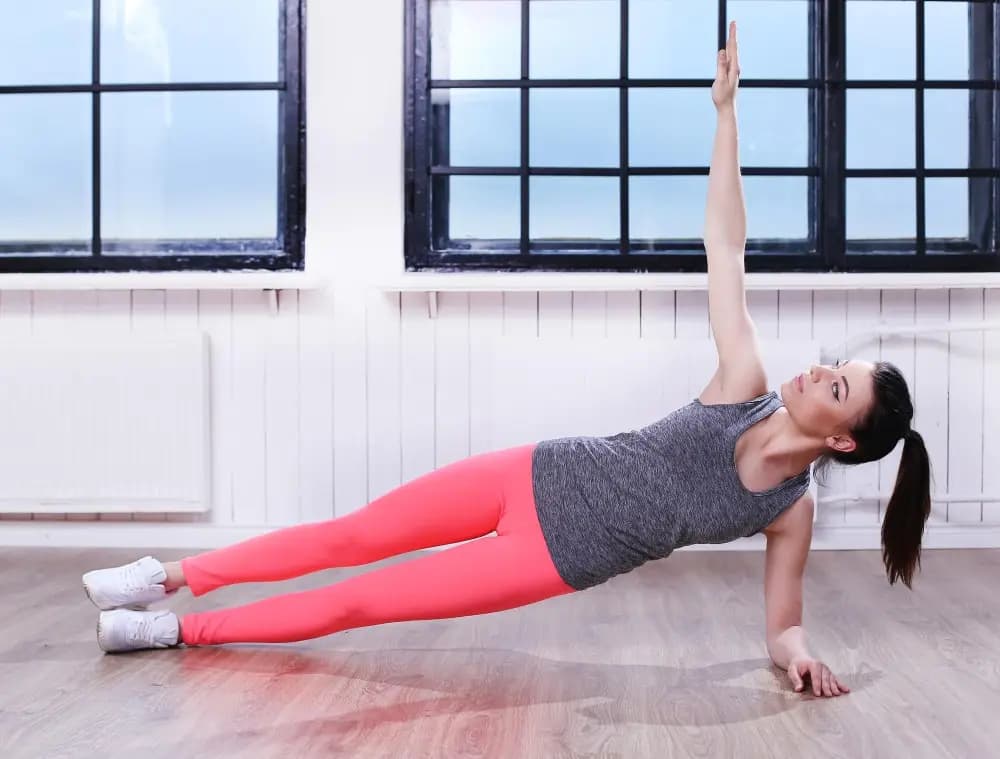
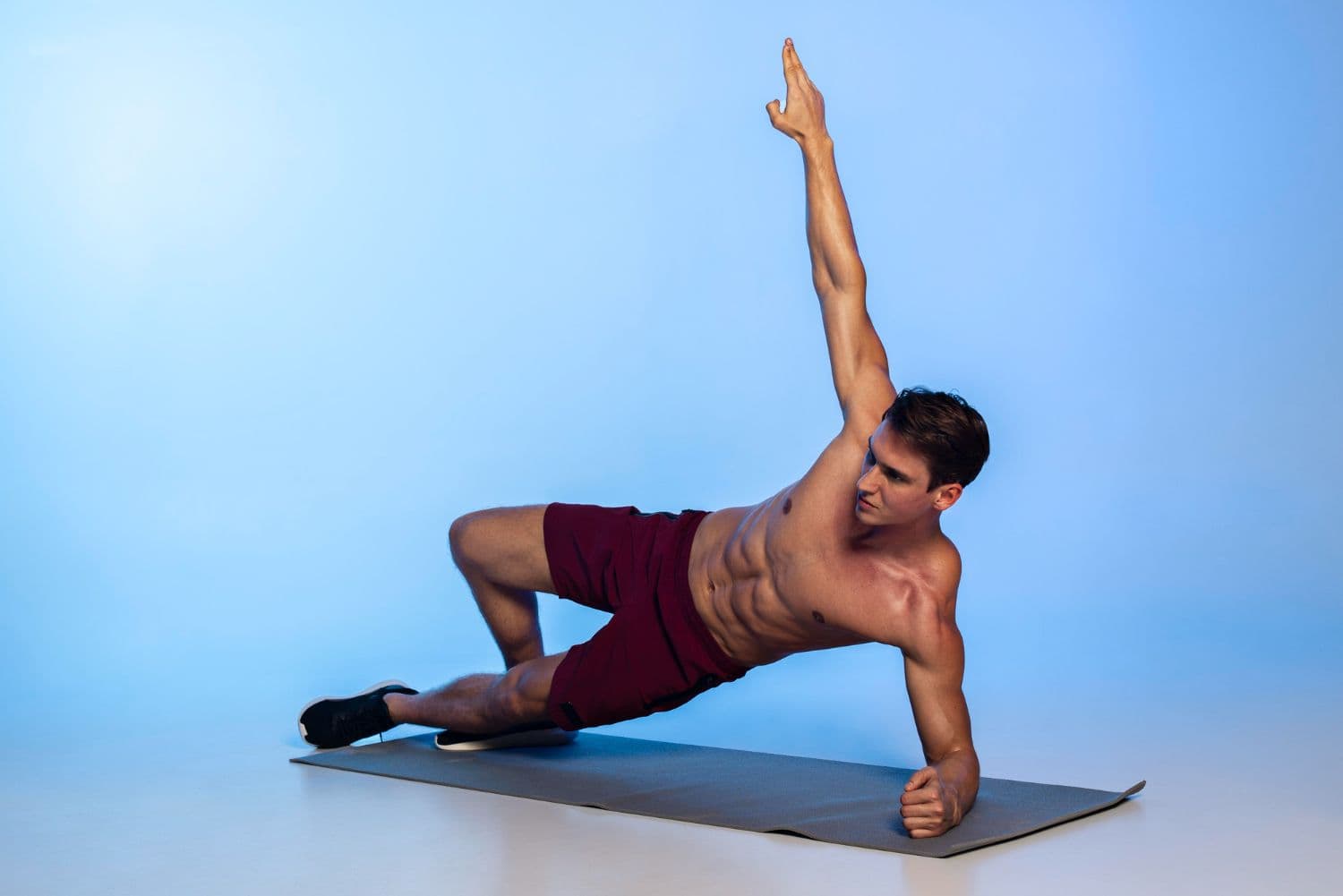
Plank rotations are a great exercise for building core strength while also improving balance and stability. This movement combines the benefits of a regular plank with a twisting motion that works multiple muscle groups at the same time. To perform this exercise, you begin in a high plank position, which looks like the top part of a push-up, with your arms straight and your body in a straight line from head to heels. From this position, you slowly turn your body to one side while lifting one arm up toward the ceiling, creating a twisting motion. This movement engages your core muscles, as well as your shoulders, arms, and legs, making it an effective full-body workout.
Benefits of Plank Rotations
- Strengthens Your Core: Plank rotations target your entire core, including your rectus abdominis (the "six-pack" muscles), obliques (side abs), and transverse abdominis (deep core muscles). A strong core improves posture, reduces back pain, and enhances overall athletic performance.
- Improves Stability and Balance: The rotational movement forces your body to stabilize itself, which improves balance and coordination.
- Engages Multiple Muscle Groups: Unlike traditional planks, plank rotations work your shoulders, arms, chest, and back, making it a more comprehensive upper-body workout.
- Boosts Functional Fitness: The twisting motion mimics everyday movements, like reaching for something on a high shelf or swinging a golf club, making it a practical exercise for real-life activities.
- Burns Calories: Because plank rotations engage so many muscles, they can help you burn more calories compared to static exercises like regular planks.
How to Do Plank Rotations Correctly
Performing plank rotations with proper form is crucial to avoid injury and get the most out of the exercise. Follow these steps:
- Start in a High Plank Position: Place your hands directly under your shoulders, feet hip-width apart, and body in a straight line from head to heels.
- Engage Your Core: Tighten your abs as if you’re bracing for a punch. This will help stabilize your body during the rotation.
- Rotate to One Side: Shift your weight onto your left hand and rotate your body to the right, lifting your right arm toward the ceiling. Your body should form a "T" shape.
- Hold for a Second: Pause briefly at the top of the rotation to maximize muscle engagement.
- Return to the Starting Position: Lower your right hand back to the floor and repeat the movement on the other side.
- Repeat: Aim for 8-12 repetitions on each side, depending on your fitness level.
Tips for Beginners
- Take Your Time: If you have never done plank rotations before, it is important to start slowly. Do not rush through the movement. Instead, focus on getting the correct posture and movement before trying to go faster.
- Make Adjustments If Needed: If you find it too difficult to lift your entire arm while rotating, you can modify the exercise. Instead of raising your whole arm, try just lifting your hand slightly off the ground. This will make the movement easier while still helping you build strength.
- Check Your Posture: Using a mirror can help you see whether your body is in the right position. Make sure your body stays in a straight line while you rotate. This will help you perform the exercise correctly and avoid injuries.
- Remember to Breathe: It is important not to hold your breath while doing this exercise. Try to inhale as you rotate your body and exhale as you return to the starting position. This will help you stay relaxed and maintain a steady rhythm.
Common Mistakes to Avoid
- Sagging Hips: Keep your hips level with your shoulders to maintain proper alignment.
- Rushing Through Reps: Slow, controlled movements are more effective than fast, sloppy ones.
- Over-Rotating: Rotate only as far as you can while keeping your body stable. Over-rotating can strain your lower back.
- Neglecting Your Core: Remember to engage your abs throughout the entire movement.
How to Incorporate Plank Rotations into Your Workout Routine
Plank rotations are versatile and can be added to almost any workout routine. Here are a few ideas:
- As Part of a Core Workout: Include plank rotations in a circuit with other core exercises like crunches, Russian twists, and leg raises.
- In a Full-Body Workout: Combine plank rotations with squats, push-ups, and lunges for a full-body burn.
- As a Warm-Up or Finisher: Use plank rotations to activate your core before a workout or to fatigue your muscles at the end.
How MyFitnessCoach Can Help You Master Plank Rotations
If you’re looking to incorporate plank rotations into your fitness routine but aren’t sure where to start, the MyFitnessCoach app is here to help. This user-friendly fitness app offers guided workouts, step-by-step tutorials, and personalized plans to help you achieve your goals. Whether you’re a beginner or a seasoned fitness enthusiast, MyFitnessCoach provides the tools and motivation you need to stay on track.
With MyFitnessCoach, you can:
- Access video demonstrations of plank rotations and other exercises.
- Track your progress and see improvements over time.
- Receive customized workout plans tailored to your fitness level.
- Stay motivated with reminders, challenges, and rewards.
Ready to Transform Your Fitness Journey?
Plank rotations are a simple yet powerful exercise that can take your core workout to the next level. Whether you’re looking to build strength, improve stability, or enhance your overall fitness, this move is a must-try. And with the MyFitnessCoach app, you’ll have all the guidance and support you need to succeed.
Download MyFitnessCoach today and start your journey toward a stronger, healthier you!
Frequently Asked Questions
Similar Articles
Stay informed with these similar articles.
MyFitnessCoach
April 24, 2024
Unlock Your Core's Power | Core Workout Guide | MFC Guides
In today’s fast-paced world, a strong core is the centerpiece of a fit and healthy body, offering not just a lean and sculpted midsection, but also improved posture, enhanced athletic performance, and a shield against injuries. This comprehensive guide is tailored for everyone – from beginners to fitness enthusiasts and athletes – aiming to build a resilient core that powers you through life's daily activities and challenges.
MyFitnessCoach
October 26, 2023
Copenhagen Plank: A Simple Guide for Core Strength and Stability
When considering the world of fitness, it becomes very clear that simplicity often gets you the winning results. Although there are many complicated and complex workout routines available, it is often the simple exercises that demand nothing more than one's own body and a strong determination that prove to be the most effective. One such exercise, the Copenhagen Plank, has gained considerable attention in recent times due to its unique capacity to work on the core and hip muscles, effectively promoting enhanced stability and strength. The primary objective of this article is to simplify the complexities of the Copenhagen Plank exercise, presenting a comprehensive guide made for both beginners and passionate fitness enthusiasts alike. So let’s dive right in:
MyFitnessCoach
February 14, 2025
Poor Squat Technique: How to Fix Common Mistakes
Squats are one of the best exercises for building strength, improving mobility, and enhancing overall fitness. However, poor squat technique can lead to injuries, pain, and ineffective workouts. Many people unknowingly make mistakes that put unnecessary stress on their knees, lower back, and ankles.