
Subway Calorie Calculator: Avoid 700-Calorie Mistakes in 2026

MyFitnessCoach
July 21, 2026
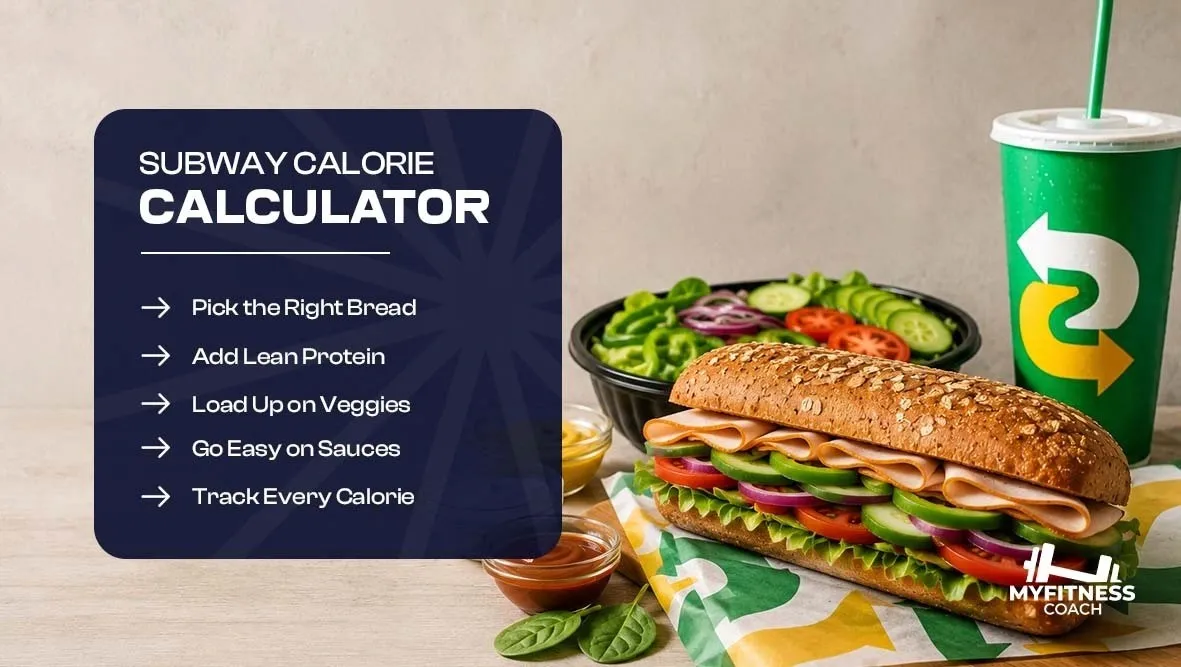
You order a turkey sub thinking it's the "safe" choice, then find out the ranch and cheese quietly doubled the damage. It happens to almost everyone. A Subway calorie calculator fixes that guesswork. It adds up your exact bread, protein, cheese, veggies, and sauce so you see the real number before you order, not after.
I've tracked fast food meals for years while coaching people through weight loss plans, and Subway is the chain where builds swing the hardest. The same sandwich can land anywhere from 230 to 700+ calories in 2026 depending on a few taps. This guide gives you the numbers, the traps, and the exact orders that fit your calorie budget.
What Is a Subway Calorie Calculator?
A Subway calorie calculator is a free tool that totals the calories, protein, carbs, and fat in a custom Subway order. You pick your size, bread, protein, cheese, vegetables, and sauces, and it adds up official nutrition data for each ingredient into one final number.
That matters because Subway isn't a fixed-menu chain. And that's the whole problem with printed nutrition charts: they show standard builds, not your build. Add double cheese and chipotle southwest sauce, and the chart number stops being true.
A calculator turns "roughly healthy" into an exact number you can plan around. That's the difference between guessing and tracking.
How to Calculate Subway Calories Step by Step
Calculating your Subway meal takes under a minute: choose your format, then add each ingredient's calories in order: bread, protein, cheese, veggies, sauce. Every ingredient has a published value, so your total is just a simple addition done for you.
Here's the exact order that keeps it clean:
- Pick your base. 6-inch, footlong, wrap, salad, or protein bowl. This sets your starting calories: a salad base starts near zero, a footlong bread starts around 360–440.
- Choose bread. Most 6-inch breads run 180–250 calories.
- Add protein. Turkey and grilled chicken are lean; tuna and meatballs run heavier. Double meat adds roughly 80–180 calories.
- Add cheese. Most cheeses add 40–100 calories per 6-inch serving.
- Stack vegetables freely. Lettuce, tomato, cucumber, peppers, onions, spinach, pickles, and jalapeños add almost nothing, usually 5–25 calories combined.
- Choose sauce last, and carefully. This one choice can swing your meal by 100+ calories.
But here's the thing most people do steps 1 through 5 right and blow the whole plan on step 6. That's why sauces get their own section below.
Subway Bread Calories Compared (Based on US Subway menu 2026)
Bread is your foundation and your first 180–250 calories. For a standard 6-inch serving, the gap between the lightest and heaviest bread is around 70 calories per meal, but it compounds if you eat Subway weekly.
| Bread (6-inch) | Approx. Calories | Best For |
| Multigrain / Wheat | ~180–210 | Everyday balanced orders |
| Italian (White) | ~180–200 | Lowest-calorie classic option |
| Honey Oat | ~220 | Slightly sweeter, a bit more fiber |
| Italian Herbs & Cheese | ~240–250 | Flavor pick — highest calorie bread |
| Flatbread | ~220–230 | Not the "light" choice people assume |
| Wrap (lavash, full) | ~290–310 | Heaviest carrier on the menu |
Quick win: swapping Herbs & Cheese for wheat saves ~50 calories without changing your sandwich much. Also, don't fall for the wrap trap; the wrap shell alone carries more calories than any 6-inch bread.
Where Calories Really Hide: Sauces and Cheese
Sauces are the single biggest calorie swing in any Subway order. Creamy sauces like regular mayo and ranch add roughly 100–140 calories per serving, while mustard and vinegar add close to zero. Your sauce choice can matter more than your protein choice.
From our testing across dozens of logged client meals, the same 6-inch turkey sub ranged from about 280 calories (mustard, no cheese) to about 520 calories (ranch, double cheddar). Same sandwich on the receipt. Nearly double the calories.
| Sauce (per serving) | Approx. Calories |
| Vinegar | ~0 |
| Yellow mustard | ~5–10 |
| Sweet onion | ~30–40 (watch the sugar) |
| Oil | ~40–50 |
| Honey mustard | ~60–80 |
| Chipotle Southwest | ~90–100 |
| Regular mayo | ~100–110 |
| Ranch | ~110–140 |
Cheese plays the same quiet game. American or provolone adds roughly 40–60 calories per 6-inch; going double pushes past 100. Keep the cheese if you love it just count it.
6-Inch vs Footlong: The Doubling Rule
A footlong is essentially two 6-inch sandwiches, so the fastest mental math is to double the 6-inch calories. A ~280-calorie 6-inch turkey becomes a ~560-calorie footlong. For most published menu items, this doubling rule gets you within a close range of the official figure.
Why doesn't my footlong equal exactly 2× the 6-inch?
Because sauce and cheese portions don't always scale in perfect proportion, and some builds list slightly different standard toppings by size. The doubling rule is a solid estimate, not a lab measurement expect small variances of a few percent.
How many calories in a footlong?
Anywhere from roughly 460 (Veggie Delite on wheat, light sauce) to well over 1,000 (Spicy Italian or tuna wraps with creamy sauce). The range is the answer which is exactly why a subway calorie counter beats memorizing menu numbers.
Lowest Calorie Subway Orders in the US 2026
The lowest calorie Subway options are salads and lean-protein 6-inch subs with mustard or vinegar instead of creamy sauce. A Veggie Delite salad can run as low as roughly 90–150 calories, and several lean subs land under 350.
| Order | Approx. Calories | Approx. Protein |
| Veggie Delite Salad (light dressing) | 90–150 | 5–10g |
| Grilled Chicken Salad | ~140–440* | 24–26g |
| Veggie Delite 6-inch | ~230–320 | 12–17g |
| Oven-Roasted Turkey 6-inch (mustard) | ~270–340 | ~18–26g |
| Ham & Turkey Stacker 6-inch | ~290 | ~20g |
*Salad ranges depend heavily on dressing and cheese; the same salad can triple with ranch.
The pattern: the vegetables are never the problem. The stuff you pour on them is.
If you're eating light at Subway to support a cut, pair these orders with a structured plan. Our 12-week shred approach walks through how to set the daily numbers these meals should fit into.
High-Protein Subway Orders
For muscle-building goals, judge Subway orders by protein per calorie, not protein alone. Protein bowls win this metric easily; they drop the 180–250 bread calories while keeping the full meat serving, often delivering 40g+ protein for moderate calories.
Strong picks:
- Grilled Chicken Protein Bowl roughly 290–620 calories depending on add-ons, with ~46–48g protein. The efficiency king.
- Subway Club Protein Bowl around 410 calories, ~44g protein.
- Sweet Onion Teriyaki Chicken 6-inch about 430 calories with ~29g protein and low fat.
- Rotisserie chicken or double-turkey built double meat is the cheapest protein upgrade on the menu, calorie-wise.
Plus, protein bowls solve the sauce problem partially. You notice a heavy dressing on a bowl far more than buried in bread.
Fitting Subway Into Your Daily Calorie Budget
A Subway meal number only becomes useful when you compare it against your daily calorie target. If you maintain on 2,200 calories and want a deficit at 1,800, a 450-calorie sub is a quarter of your day totally workable if the other meals are planned around it.
None of the calculator sites tell you this part, and it's where diets actually succeed or fail. The number isn't the goal. What you do with the number is the goal. In my experience, people who log the meal immediately after ordering stick to their targets far more consistently than people who "remember it later."
The simple workflow:
- Calculate your build before you order.
- Check it against your remaining calories for the day.
- Log it right away, then adjust dinner not tomorrow, tonight.
If you don't have a daily target yet, that's step zero. The MyFitnessCoach app sets your calorie and macro targets from your stats and goal, then lets you log meals like this in seconds so a Subway run becomes a data point in your plan instead of a mystery.
What Real MyFitnessCoach Users Say About Tracking Subway
Tracking a Subway order sounds simple until you're standing at the counter trying to remember if the ranch was 100 or 140 calories. That's exactly the gap MyFitnessCoach fills.
Bianca, a real MFC user, lost 12 lbs in 4 months and meals like Subway were part of her routine, not off-limits. The key was logging them accurately instead of guessing.
Robert Stephens, another MFC user, put it simply:"The calorie and nutrient tracking section fits perfectly into my daily routine. After adding what I eat, it's easy to compare it to my daily calorie target. The barcode scanning option is especially helpful for quick access after work."
For Subway specifically, MFC lets you log each ingredient separately: bread, protein, cheese, sauce so your tracked number matches your actual build, not a generic menu estimate. No guesswork, no hidden calories slipping through.
How Accurate Are These Numbers?
Calculator results are close estimates built on Subway's official published nutrition data, typically accurate within roughly 10% of your actual meal. Real-world variance comes from the human behind the counter portion scoops, sauce squeezes, and regional menu differences all shift the final number slightly.
Some people argue calorie counting fast food is pointless because of that variance. Fair point no calculator captures an extra-generous mayo pass. But a consistent 10% margin still beats a 100% guess, and tracking trends matters more than any single meal's exact figure.
Two things keep your numbers honest. First, values differ by country; a US turkey footlong doesn't match the UK or Canadian version, so use US data for US stores. Second, anchor to official sources: Subway publishes its nutrition data, and percent daily values across the industry follow the FDA's daily value standards based on a 2,000-calorie diet. Sodium deserves special attention here; many footlongs exceed 1,500 mg, most of the way to the 2,300 mg daily limit.
Whether you're cutting, bulking, or just curious, a subway calorie calculator turns a menu full of unknowns into a plan you control. Run your usual order through it once most people find at least one 100-calorie fix they can make without missing it.
Conclusion
Subway can be one of the most diet-friendly fast food options in the US or one of the sneakiest and the difference is knowing your numbers. Use a subway calorie calculator before you order, watch the sauce line, and log the meal against your daily target. That one habit does more than any "healthy menu" label ever will.
Ready to make every meal count, not just the Subway ones? Get your personal calorie and macro targets, log any meal in seconds, and track your progress with MyFitnessCoach. Download the app and turn today's sub into part of the plan.
Frequently Asked Questions
Similar Articles
Stay informed with these similar articles.

MyFitnessCoach
October 18, 2023
What Does Body Goals Mean? A Path to a Healthy Lifestyle
In the world we live in now, lots of people talk about "body goals," which means having a body that's seen as perfect. On social media, in magazines, and on TV, we see lots of pictures of people with what seems like perfect bodies, which makes us feel like we have to look like them. But the real meaning of "body goals" is more than just looking good. It's about taking care of your whole self, not just how you look. In this article, we will discuss what does body goals actually mean and how you can achieve your body goals. Let’s get started:
.webp&w=3840&q=75)
MyFitnessCoach
September 5, 2023
How Much Protein in an Egg | The Nutritional Power
Eggs have long been a breakfast favorite for many, and for good reason. They're not only delicious but also packed with essential nutrients, making them a versatile and nutritious addition to your diet. One of the most common questions about eggs is, "How much protein is in an egg?" In this comprehensive guide, we'll delve into the world of eggs and explore their protein content, nutritional benefits, and how they can contribute to a balanced diet.
MyFitnessCoach
May 18, 2023
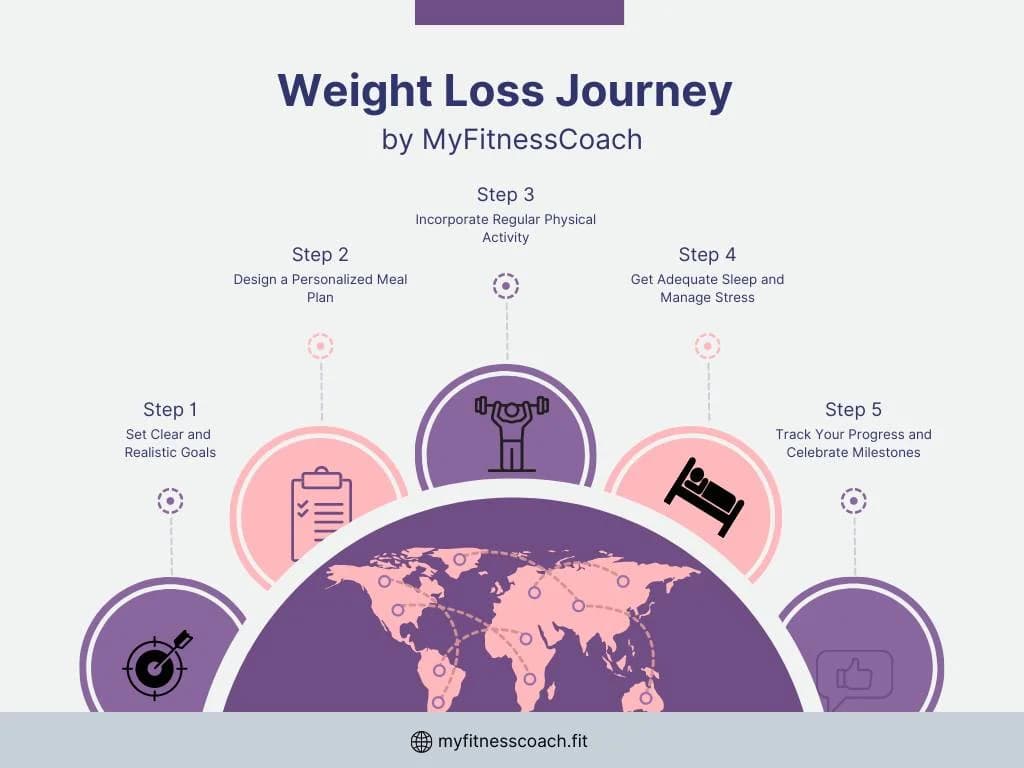
Fitness Guide: How Do I Start A Weight Loss Journey
Ready to start on a life-changing weight-loss journey? Congratulations for taking the first step towards being a better and happier version of yourself! Starting off a weight-loss journey may be both satisfying and stressful. With so much information available, having a well-defined plan and trusted assistance in achieving your goals is important. This article will help you start your weight-loss journey and achieve the results you desire.