
Low Calorie Alcohol Drinks: 12 Easy Wins for Weight Loss
MyFitnessCoach
July 16, 2026
It's Friday night, you've hit your calorie target all week, and now there's a drinks menu in your hand daring you to undo it. Sound familiar? The good news: low calorie alcohol drinks are real, and some land under 100 calories a glass. You don't have to choose between a social life and a deficit.
I've spent years helping people track their food inside a fitness app, and alcohol is the number one thing they forget to log or avoid logging on purpose. This guide fixes that. You'll get every major drink ranked by calories, the mixer traps that quietly triple your intake, and a simple way to budget drinks into your week without guessing.
Low calorie alcoholic drinks are alcoholic beverages that deliver roughly 100 calories or less per standard serving typically straight spirits, light beers, hard seltzers, and dry wines. In 2026, with hard seltzer shelves bigger than ever in US stores, you've got more sub-100-calorie options than any generation before you.
Table of Contents
Subscribe to our newslettter
What Counts as a Low Calorie Alcoholic Drink?
A low calorie alcoholic drink contains about 100 calories or less per standard serving. Since pure alcohol carries 7 calories per gram, and a US standard drink holds 14 grams of alcohol, roughly 98 calories is the practical floor. Anything close to that floor qualifies. Anything far above it is getting calories from sugar, not just alcohol.
That 7-calories-per-gram figure matters. It puts alcohol between carbs and protein (4 per gram) and fat (9 per gram), except alcohol brings zero protein, fiber, vitamins, or minerals along for the ride. According to the National Institute on Alcohol Abuse and Alcoholism, one standard drink equals a 12 oz regular beer, a 5 oz glass of wine, or a 1.5 oz shot of 80-proof spirits.
Here's the rule that simplifies everything: the alcohol itself is nearly a fixed cost. The sugar around it is the variable you control.
The 12 Lowest Calorie Alcohol Drinks, Ranked
The lowest calorie alcohol drinks are light beer, straight spirits, and hard seltzer all sitting between 90 and 110 calories per serving. Dry wines follow at around 120. The ranking below uses US standard serving sizes, so you can compare like for like.
| Rank | Drink | Serving | Calories (approx.) |
|---|---|---|---|
| 1 | Corona Premier (light beer) | 12 oz | 90 |
| 2 | Champagne / brut sparkling wine | 5 oz | 90–105 |
| 3 | Michelob Ultra (light beer) | 12 oz | 95 |
| 4 | Miller Lite (light beer) | 12 oz | 96 |
| 5 | Vodka, tequila, gin, whiskey, or rum (neat) | 1.5 oz | 97 |
| 6 | Vodka soda with lime | 1.5 oz + soda | 97 |
| 7 | Tequila with lime | 1.5 oz shot | 99 |
| 8 | Hard seltzer (White Claw, High Noon, Truly) | 12 oz | 95–110 |
| 9 | Coors Light | 12 oz | 102 |
| 10 | Rum and Diet Coke | 7.5 oz serving | ~100–135 |
| 11 | Dry rosé | 5 oz | 120 |
| 12 | Dry white or red wine (Sauvignon Blanc, Pinot Noir) | 5 oz | 119–125 |
Notice something? Every 80-proof spirit lands at the same 97 calories. Distillation strips out sugars and carbs, so vodka isn't "lighter" than whiskey at equal proof. Pick the one you actually enjoy.
Sweet wines are the outlier to watch. A Moscato or port can run 150–230 calories per glass dry is the word to look for on any wine list.
Best Low Calorie Mixed Drinks to Order at Any Bar
The best low calorie mixed drinks pair a single spirit with a zero-calorie mixer: vodka soda, gin with diet tonic, tequila soda, whiskey with diet ginger ale, or rum with Coke Zero. Each stays within a few calories of the spirit alone, usually 97 to 110 total.
A few orders that work anywhere in the US:
- Vodka soda with fresh lime ~97 calories, the gold standard
- Ranch water (tequila, sparkling mineral water, lime) ~100 calories, huge in Texas and spreading fast
- Gin and diet tonic ~98 calories, saves you roughly 74 calories versus regular tonic
- Dry martini ~185 calories; not sub-100, but far leaner than any sugared cocktail
- Skinny margarita (fresh lime, splash of agave, no triple sec) ~150 versus 275+ for the regular version
And here's a bartender-friendly trick: ask for a single measure with extra ice and a tall glass. Same drink, slower pace, fewer refills.
The Mixer Trap: How 97 Calories Becomes 400
Mixers, not spirits, cause most of the calorie damage in alcoholic drinks. A 97-calorie pour of gin becomes 171 calories with tonic, over 200 with cranberry juice, and 300–500 in a tropical cocktail. The spirit stayed the same, only the sugar around it changed.
Tonic water is the sneakiest offender because it sounds like soda water. It isn't. Regular tonic carries close to the same sugar as a soft drink. Juice "mocktail bases," simple syrup, grenadine, and liqueurs like triple sec each stack on another 50–150 calories.
One drink can quietly cost more than your afternoon snack and a piña colada can cost more than lunch (up to 500+ calories).
Some people argue calorie-counting drinks kill the fun of a night out, and honestly, there's something to that. If you're out twice a year, order whatever you want. But if drinks are a weekly habit, the math compound, two sugary cocktails a week is roughly 40,000+ calories a year versus about 10,000 from vodka sodas.
If you're not sure what your usual order actually costs you, a calorie tracker like MyFitnessCoach can pull up most branded drinks in seconds worth checking before your next round, not after.
Low Calorie Canned Drinks: Seltzers and Ready-to-Drink Cocktails
Canned hard seltzers and ready-to-drink (RTD) cocktails are the easiest low calorie alcohol drinks to grab in the US, most landing between 95 and 110 calories per 12 oz can. The label does the math for you: no bartender variables, no mystery pours.
Solid picks on American shelves right now:
- White Claw ~100 calories, 2g sugar per can
- High Noon (vodka + real juice) ~100 calories, the top-selling US RTD
- Truly ~100 calories across most flavors
- Michelob Ultra Organic Seltzer ~80 calories, one of the lightest on the market
One caution: "canned cocktail" and "hard seltzer" aren't the same thing. Canned margaritas and espresso martinis often run 200–300 calories. Flip the can and check the panel anything with added sugar in the first three ingredients isn't the light option it's dressed up as.
Does Alcohol Slow Fat Loss?
Yes alcohol temporarily pauses fat burning because your liver treats ethanol as a priority and processes it before anything else. While that happens, calories from the food you ate alongside your drinks are more likely to be stored. The effect is temporary, but it's real, and it stacks with alcohol's appetite boost.
That appetite effect deserves its own warning. Studies consistently show alcohol lowers inhibition around food, which is why 1 a.m. pizza feels like destiny after three drinks. The drink was 97 calories; the slice parade after it was 800.
The counterpoint worth knowing: research reviews find light-to-moderate drinking isn't clearly linked to weight gain; it's heavy, frequent drinking that shows a consistent connection. So the goal isn't zero. It's keeping both the drink count and the drunk-snacking in check. If you haven't already, define your body goals first your drink budget follows from there.
The drink you log honestly beats the drink you pretend didn't happen.
Does Alcohol Break a Fast?
Yes, alcohol breaks a fast. Every alcoholic drink contains calories at minimum around 98 from the ethanol itself and any calorie intake ends a true fasting window. There is no fasting-safe alcoholic drink, no matter how "skinny" the label claims.
If you follow intermittent fasting, schedule drinks inside your eating window, ideally with or after a protein-rich meal. Drinking on a fully empty stomach hits harder, spikes appetite faster, and makes the next morning's fast tougher to hold.
In my experience, this is the question fasting beginners ask most and the one competitor guides skip. Plan your social nights on days when your eating window runs later, and the two habits coexist just fine.
How to Track Drinks So One Night Doesn't Wreck Your Week
The simplest system: give yourself a weekly drink budget instead of a daily one. Decide in advance say, 400 calories of drinks per week and spend it however you like. Three vodka sodas, two glasses of dry wine, or one honest margarita. Budgeted calories don't derail anything; surprise calories do. If you're unsure how exercise offsets what you drink, our guide on what net calories actually mean breaks it down.
From our experience with MyFitnessCoach users, weekend logging drops noticeably compared to weekdays and drinks are the most commonly skipped entry. The people who keep losing weight aren't the ones who never drink. They're the ones who log the drink anyway.
Three habits that make it painless:
Log before you order, not after. Seeing "275 calories" next to a margarita changes the order more often than you'd think.
Bank calories earlier in the day a lighter lunch on a night out day keeps the weekly total flat.
Alternate every drink with water. It halves your intake and your Sunday-morning regret in one move.
You can search and log almost any branded drink from Miller Lite to High Noon inside the MyFitnessCoach food database, so your low calorie alcohol drinks show up in the same daily total as your meals. No separate spreadsheet, no guesswork.
Conclusion
Choosing low calorie alcohol drinks comes down to one habit: control the sugar around the alcohol, since the alcohol itself is a fixed ~97 calories. Pick your pour, skip the syrup, and log it like anything else you eat. Your next step? Set a weekly drink budget before Friday arrives future you will be glad you did.
Ready to see where your drinks actually fit? Download MyFitnessCoach and log your first drink in under 10 seconds the app tracks your calories, macros, and fasting windows in one place, so a night out never has to mean a lost week. [Start tracking free today.]
Frequently Asked Questions
Similar Articles
Stay informed with these similar articles.
MyFitnessCoach
October 18, 2023
What Does Body Goals Mean? A Path to a Healthy Lifestyle
In the world we live in now, lots of people talk about "body goals," which means having a body that's seen as perfect. On social media, in magazines, and on TV, we see lots of pictures of people with what seems like perfect bodies, which makes us feel like we have to look like them. But the real meaning of "body goals" is more than just looking good. It's about taking care of your whole self, not just how you look. In this article, we will discuss what does body goals actually mean and how you can achieve your body goals. Let’s get started:
MyFitnessCoach
March 5, 2025
Net Calories Meaning: A Simple Guide to Understanding Your Fitness Goals
When it comes to fitness and weight management, the term "net calories" is often thrown around. But what does it really mean? If you're trying to lose weight, gain muscle, or simply maintain your current physique, understanding net calories is crucial. In this article, we’ll break down the concept of net calories in simple words, explain how it impacts your fitness journey, and introduce you to a powerful tool—MyFitnessCoach—that can help you track and achieve your goals.
MyFitnessCoach
July 20, 2026
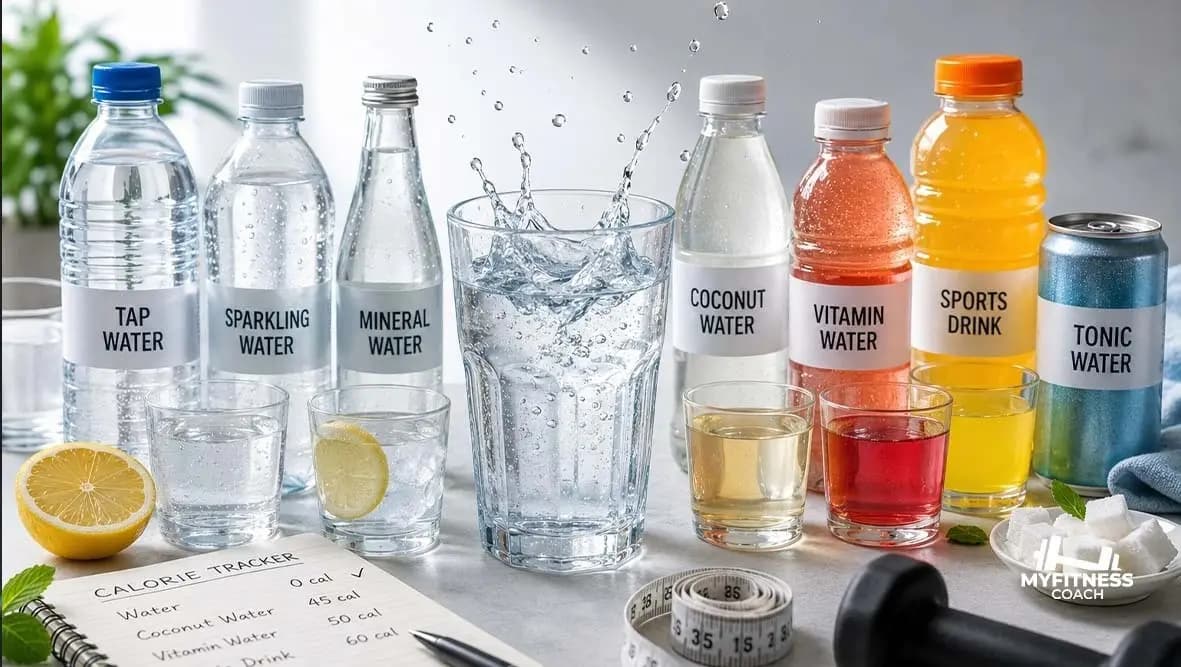
Does Water Have Calories? 7 Shocking "Water" Drinks That Aren't Zero
You're logging your food after dinner, you get to the three glasses of water you drank, and you pause and wait, does water have calories? Should this even go in the diary? It's one of the most common questions people ask when they start tracking what they eat, and in 2026, with more Americans counting calories than ever, it deserves a straight answer.