
Gelatin Recipe For Weight Loss: 5 Easy Steps for Perfect Results
MyFitnessCoach
July 14, 2026
Medical disclaimer: This article is for informational purposes only and does not constitute medical advice. Consult your healthcare provider before starting any new eating habit, especially if you have a pre-existing health condition, take medication, or are pregnant.
You saw it on your feed again last night. Someone stirring a spoonful of gelatin into a glass of water, sipping it before dinner, promising it curbed their appetite like magic. Maybe you rolled your eyes. Maybe you also opened a new tab to search the exact gelatin recipe for weight loss, just in case there was something to it.
There is something to it, and it isn't magic. In 2026, the gelatin trick has become one of the most searched weight-loss habits online, and the honest version of the story is more useful than any viral clip. This guide gives you the exact recipe, the real mechanism behind it, who should avoid it, and a simple way to check whether it's actually doing anything for your body instead of just guessing.
Table of Contents
Subscribe to our newslettter
What Is the Gelatin Recipe for Weight Loss?
The gelatin recipe for weight loss is a pre-meal drink made from unflavored gelatin dissolved in water, taken fifteen to twenty minutes before eating. It's built on a simple idea: a small dose of protein before a meal helps you feel full sooner, so you naturally eat less once you sit down.
It isn't a fat burner, a detox, or a substitute for a meal. It's a cheap, low-calorie way to apply something nutrition science has supported for years: a protein preload changes how much you eat at the next meal, even in small amounts.
Why It's Suddenly Everywhere in 2026
This isn't a brand-new idea. Bone broth traditions have used a version of this for generations. What changed is the packaging: short videos turned a five-minute kitchen habit into a viral alternative to GLP-1 medications, and search interest for gelatin recipes climbed sharply through late 2025 and into early 2026.
Part of the appeal is obvious. Prescription weight-loss medication can run into thousands of dollars a year. A tablespoon of gelatin costs pennies. That contrast is exactly why so many people are searching for the exact recipe instead of just watching another video about it.
The Exact Gelatin Recipe for Weight Loss
Here's the base version, no extra fluff, no upsell attached to it.
Ingredients (1 serving):
- 1 tablespoon (about 7g) unflavored gelatin powder
- 8 oz (1 cup) water, split into cold and hot portions
- 1 teaspoon lemon juice (optional, for taste)
- 1 small pinch of salt (optional)
Steps:
- Pour 2 tablespoons of cold water into a glass and sprinkle the gelatin evenly over the top. Let it sit for 2 to 5 minutes until it looks wrinkled. This is called blooming, and skipping it is the #1 reason people end up with lumpy gelatin water.
- Warm the remaining water until hot but not boiling, then pour it over the bloomed gelatin.
- Stir until it's completely dissolved and smooth, with no gritty texture left.
- Add lemon juice and salt if you're using them.
- Drink it 15 to 20 minutes before your meal, while it's still liquid.
If you want more protein in the mix, whisk in half a scoop of unflavored or vanilla protein powder after the gelatin dissolves. That single change turns a 6-gram protein drink into an 18 to 22-gram one, which matters more than people realize.
The Pink Gelatin Version
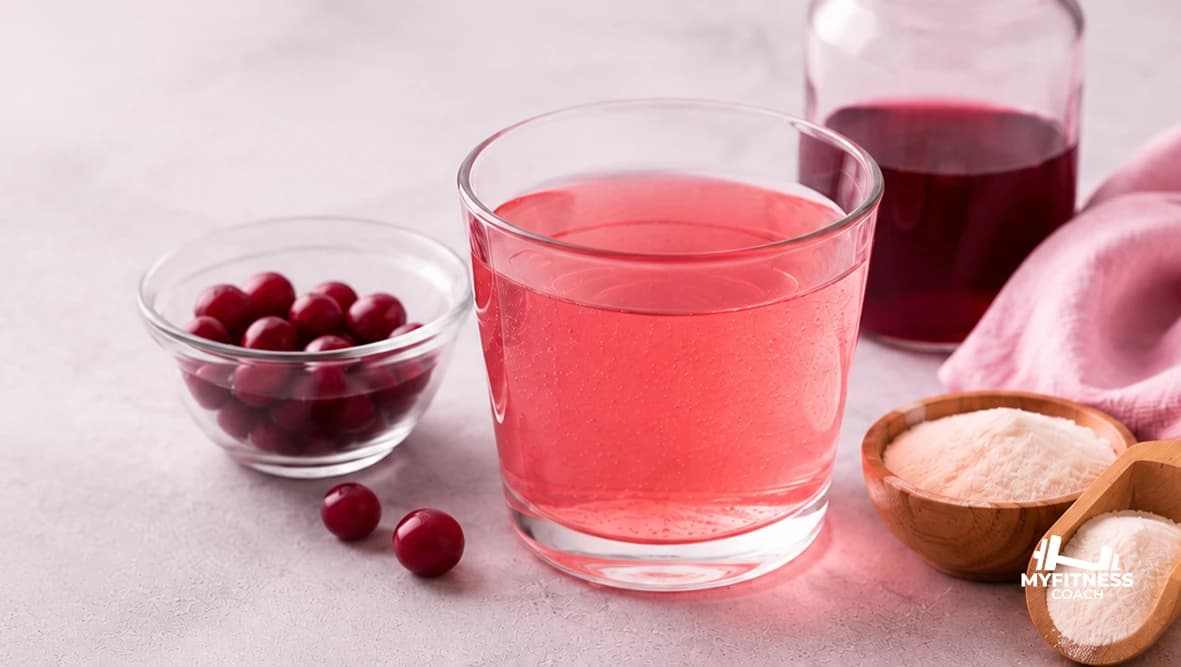
The pink version swaps some of the water for unsweetened cranberry or pomegranate juice. It's the same mechanism with a different color and a slightly different taste.
3-ingredient pink version:
- 1 tablespoon unflavored gelatin
- 3/4 cup hot water
- 1/4 cup unsweetened cranberry juice
Bloom, dissolve, and drink the same way as the classic version. One thing worth knowing: some pink gelatin recipes online lean heavily on sweetened juice, which adds sugar you don't need. If you want the color without the sugar load, use unsweetened juice and keep the ratio small, exactly as written above.
What's Actually Happening in Your Body
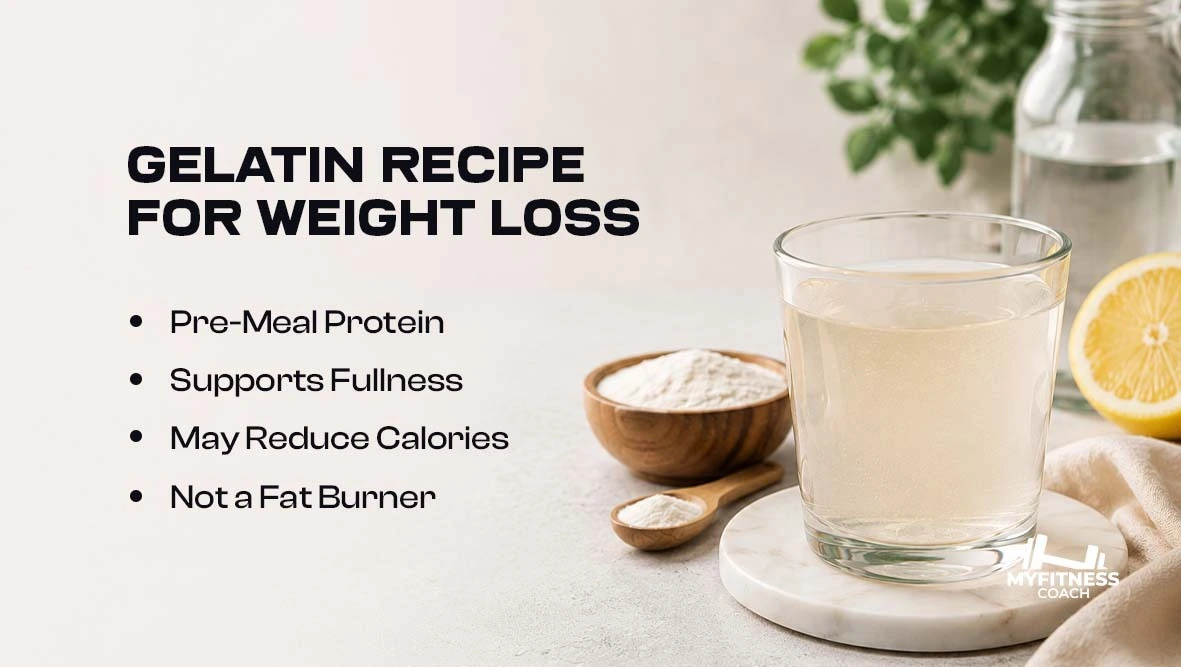
Here's the direct answer: gelatin is mostly protein, and protein taken before a meal triggers hormones like GLP-1 that signal fullness to your brain, while the gelatin itself takes up physical space in your stomach. Both effects together make you naturally reach for less food once you start eating.
Registered dietitians who've weighed in on the trend point out that the effect is real but modest. It works the same way any pre-meal protein does, whether that's a protein shake, a handful of nuts, or a cup of broth. Gelatin isn't uniquely powerful here; it's just cheap and easy to prepare.
There's a counterpoint worth sitting with. Some nutrition professionals push back on the "trick" framing entirely, arguing that training your brain to eat less through a near-zero-calorie ritual isn't the healthiest relationship with food for everyone. It's a fair point, and it's exactly why this works best as one tool inside a normal eating pattern, not a replacement for one.
Gelatin is also an incomplete protein, missing a few essential amino acids that a complete protein source has. That's a real limitation if you're using it as your only protein for the day, but not a problem if you're using it the way it's intended: as a small preload, not a meal.
Screenshot-worthy line: the gelatin trick doesn't burn fat. It just makes it easier to eat less without feeling like you're white-knuckling it.
Does It Actually Work?
Yes, for appetite reduction specifically, and no, not as a standalone weight-loss plan. Clinical research on pre-meal protein preloads shows a 5 to 15 percent reduction in calories eaten at the following meal. Applied consistently over weeks, that adds up to slow, steady progress rather than a dramatic transformation.
Realistic expectations matter here. Most people who stick with it daily report somewhere around one to three pounds a month, and that's assuming the rest of their eating stays roughly the same. It will not out-eat a consistent calorie surplus, and it isn't close to what GLP-1 medication or bariatric surgery can do.
How to Know If It's Working for You
This is the part almost nobody talks about: how do you actually know the gelatin trick is doing anything, versus just assuming it is because you feel a little fuller?
The honest answer is that you need a number to compare against, not a feeling. In our coaching work with people using MyFitnessCoach, the ones who see real results treat the gelatin trick as an experiment, not a ritual. They log their meals for two weeks before starting, note their average daily intake, then keep logging after adding the pre-meal drink and check whether their intake actually dropped.
A few simple markers to track for two to three weeks:
- Daily calorie and macro intake (the food log and macro tracker in the MyFitnessCoach app does this without manual math)
- Body weight trend, not single-day readings, since daily weight bounces around from water alone
- Waist measurement once a week, same time of day
- Hunger levels before dinner, on a simple 1 to 5 scale
If your logged intake drops and your weight trend moves down over a few weeks, it's working for you specifically. If nothing changes, that's useful information too, and it means your effort is better spent somewhere else, like your overall step count or your protein target for the day.
Who Should Skip This Trick
This is not a safe habit for everyone, and it's worth reading before you try it.
- Kidney disease or a history of kidney stones: gelatin is almost entirely protein, and extra protein load can stress kidney function.
- Blood thinners or anticoagulant medication: gelatin contains compounds that may interact with clotting, so check with your prescriber first.
- Pregnancy: not dangerous on its own, but pregnancy already comes with elevated protein needs, and this adds a ritual without adding real benefit.
- History of disordered eating: a pre-meal appetite-suppression habit can slide into a restriction pattern for some people. Talk to a clinician before starting.
- Children and teens: gelatin as food is fine, but a daily appetite-management "trick" isn't appropriate for a still-developing body.
According to the Mayo Clinic, any structured change to eating habits is worth discussing with a healthcare provider if you have an existing medical condition, and that guidance applies just as much to a simple kitchen habit as it does to a formal diet plan.
Gelatin Trick vs Other Weight-Loss Tools
| Approach | What It Actually Does | Typical Result | Ongoing Cost |
| Gelatin trick | Mild pre-meal fullness, small calorie reduction | 1-3 lbs/month with daily consistency | A few dollars a month |
| Protein shake preload | Same mechanism, more complete protein | Similar to gelatin, slightly stronger satiety | $20-40/month |
| GLP-1 medication | Strong appetite suppression, slows digestion | 15-22% body weight over a year | $6,600-$15,000/year |
| Bariatric surgery | Permanently reduced stomach capacity | 60-80% of excess weight, long term | $12,500+ one-time |
None of these replace the others. The gelatin trick is a reasonable starting habit for someone with a modest amount to lose who wants a low-cost nudge. It's not a substitute for medical treatment if you're dealing with obesity-related health conditions.
Common Mistakes That Stop It From Working
- Using flavored gelatin or sugary Jell-O instead of unflavored gelatin, which adds sugar and defeats the point
- Skipping the bloom step, which leaves the drink clumpy and unpleasant enough that people quit after a few days
- Drinking it right before the meal instead of 15 to 20 minutes ahead, which doesn't give the fullness signal time to kick in
- Treating it as a meal replacement instead of a small preload before a real, balanced meal
- Expecting fat loss instead of appetite reduction, then giving up when the scale doesn't move fast
Conclusion
The gelatin trick for weight loss is real, cheap, and modestly effective when you use the exact recipe and stick with it daily. It won't replace medical treatment or burn fat on its own, but it's a low-risk habit worth testing for two to three weeks if you have no contraindications.
The only way to know if it's actually working for your body is to track it instead of guessing. Log your meals, watch your weight trend, and let the numbers tell you the truth.
Ready to find out if it's working for you? Open the MyFitnessCoach app, log your meals for two weeks, and let your food log and macro tracker show you the real number instead of a feeling.
Sources:
- Protein preload and satiety, duodenal fat perfusion study — American Journal of Physiology
- Pre-meal whey protein and energy balance study — Appetite
- Mayo Clinic — nutrition and healthy eating basics
This article was reviewed by the MyFitnessCoach Nutrition Team on July 10, 2026. It is for informational purposes only and is not a substitute for professional medical advice.
Similar Articles
Stay informed with these similar articles.

MyFitnessCoach
July 15, 2026
Starbucks Calorie Calculator 2026: 5 Menu Hacks for Dieters
You're standing at the pickup counter, phone open, staring at a Grande Iced Caramel Macchiato and wondering if it just wrecked your calorie budget for the day. That gut-drop moment is exactly why a Starbucks calorie calculator exists so you never have to guess again. In 2026, more people than ever are tracking what's actually in their morning drink, and Starbucks' own app still won't show you the calories once you swap milk or add an extra pump of vanilla. I've been logging Starbucks orders inside the MyFitnessCoach app for the last two years, and after cross-checking hundreds of drinks against Starbucks' published data, I've learned the real gap: their app tells you the standard drink, not your drink. That's the gap this guide fills.

MyFitnessCoach
July 16, 2026
Low Calorie Alcohol Drinks: 12 Easy Wins for Weight Loss
It's Friday night, you've hit your calorie target all week, and now there's a drinks menu in your hand daring you to undo it. Sound familiar? The good news: low calorie alcohol drinks are real, and some land under 100 calories a glass. You don't have to choose between a social life and a deficit.
MyFitnessCoach
July 20, 2026
Does Water Have Calories? 7 Shocking "Water" Drinks That Aren't Zero
You're logging your food after dinner, you get to the three glasses of water you drank, and you pause and wait, does water have calories? Should this even go in the diary? It's one of the most common questions people ask when they start tracking what they eat, and in 2026, with more Americans counting calories than ever, it deserves a straight answer.