
Does Water Have Calories? 7 Shocking "Water" Drinks That Aren't Zero
MyFitnessCoach
July 20, 2026
You're logging your food after dinner, you get to the three glasses of water you drank, and you pause and wait, does water have calories? Should this even go in the diary? It's one of the most common questions people ask when they start tracking what they eat, and in 2026, with more Americans counting calories than ever, it deserves a straight answer.
Here it is: plain water has zero calories. Not "close to zero" actually zero. But some drinks that call themselves "water" can quietly add 100+ calories to your day, and that's where most trackers go wrong. I've reviewed thousands of food logs, and mislabeled "water" drinks show up constantly as the hidden reason a calorie deficit stops working.
This guide covers why water is calorie-free, exactly how many calories every type of water contains, whether cold water really burns calories, and how to handle water inside a calorie tracker so your numbers stay honest.
The Short Answer: Plain Water Has 0 Calories
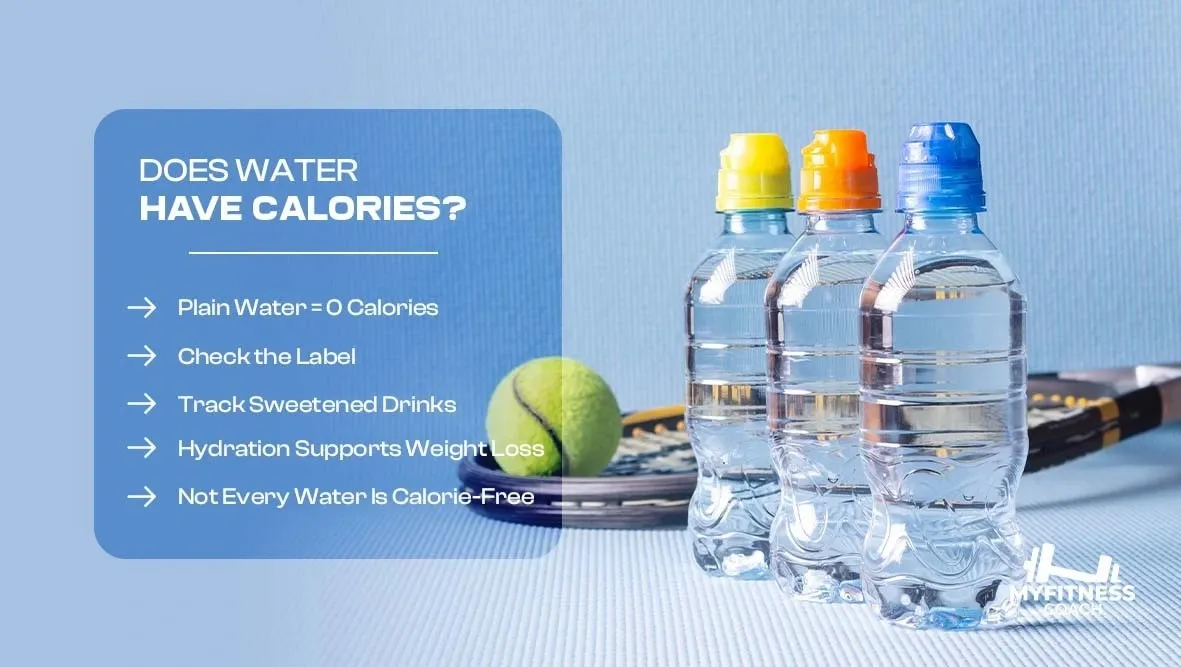
Water does not have calories. Plain water tap, spring, mineral, distilled, filtered, still, or sparkling contains 0 calories per glass, per bottle, and per gallon. That's because water has no carbohydrates, no protein, and no fat, which are the only three nutrients that supply energy. Calories only appear when something is added to the water.
Water is the only drink you can pour without ever checking a label. Hot or cold, fizzy or flat, it stays at zero.
And here's a detail most people don't know: the FDA lets any drink with under 5 calories per serving call itself "zero calorie" on the label. So a "zero calorie" flavored water might technically carry a few calories per serving. Plain water is the only drink that's truly zero, every single time.
One line worth remembering: if it came out of your tap and nothing was added, it costs you nothing.
Why Water Has No Calories: The Simple Science
Water has no calories because a calorie measures energy, and water contains nothing your body can burn for energy. Every calorie you eat comes from carbohydrates (4 calories per gram), protein (4 per gram), fat (9 per gram), or alcohol (7 per gram). Water is just H₂O two hydrogen atoms and one oxygen atom with none of those energy-carrying nutrients inside.
Think of your body like a car engine. Carbs, protein, and fat are fuel. Water is more like the coolant and oil the engine can't run without it, but it doesn't burn it for power.
Scientists actually measure calories by burning food in a sealed device and recording the heat released. Burn a gram of sugar and you get about 4 calories of heat. Try to "burn" water and you get nothing, because there are no energy-rich bonds to break.
That's also why minerals don't change the math. Mineral water can be loaded with calcium, magnesium, and potassium, and it's still 0 calories. Minerals are micronutrients your body uses them, but it can't extract energy from them.
Bottom line: no carbs, no protein, no fat means no calories. Period.
Do You Need to Log Water in a Calorie Tracker?
You don't need to log plain water for calories but you should still track it. Water contributes 0 calories to your daily total, so skipping it won't throw off your energy balance. What it does affect is hydration, appetite, energy, and even how your weight moves on the scale.
Here's the thing most calorie-counting guides miss. From our experience reviewing user food logs at MyFitnessCoach, the water mistake almost never comes from plain water. It comes from drinks people mentally file as water, vitamin water, sweetened sparkling water, coconut water and never log at all. Someone drinking two bottles of vitamin water daily can be consuming 200+ untracked calories while wondering why the scale won't budge.
So the practical rule is simple:
- Plain water: track the ounces for hydration, log 0 calories.
- Anything with flavor, sweetness, or a nutrition label: log it like food.
Tracking water intake separately also pays off. People who hit their daily water goal tend to report fewer false hunger signals, because mild thirst is easy to mistake for hunger. A hydration log sitting next to your food log catches that pattern fast. If you're already counting calories, adding a water goal takes about ten seconds a day inside a tracking app like MyFitnessCoach and it's often the missing piece in a stalled diet.
Calories in Every Type of Water Compared
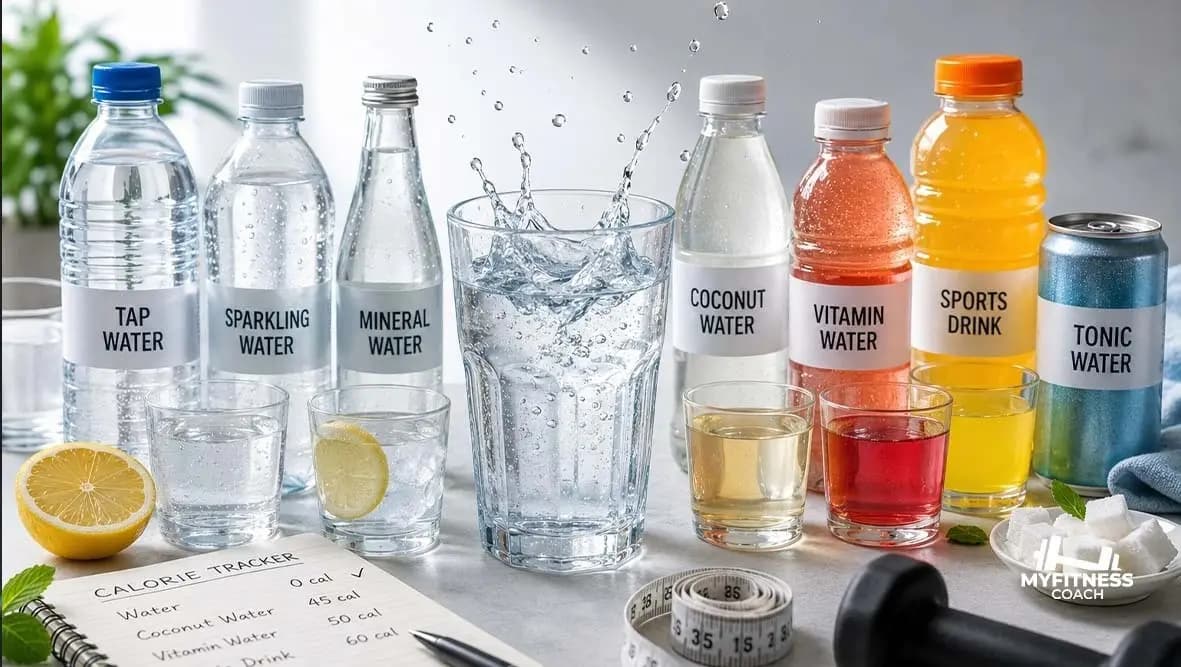
Not everything sold as "water" is calorie-free. Here's how the numbers break down per 8-ounce (240 ml) glass, based on USDA nutrition data:
| Type of Water | Calories (8 oz) | Sugar | Log It? |
| Tap water | 0 | 0 g | No |
| Spring / mineral water | 0 | 0 g | No |
| Filtered / distilled water | 0 | 0 g | No |
| Plain sparkling water (seltzer) | 0 | 0 g | No |
| Lemon water (fresh squeeze) | 1–3 | ~0 g | No |
| Sugar-free flavored water | 0–5 | 0 g | Check label |
| Tonic water | ~32 | 8 g | Yes |
| Coconut water | 40–50 | 6 g | Yes |
| Vitamin water | ~50 | 13 g | Yes |
| Sports drinks | 45–65 | 14 g | Yes |
| Flavored water (sweetened) | 30–60 | up to 15 g | Yes |
Notice the pattern the calorie count tracks the sugar column almost exactly. Water itself never adds a single calorie; the additions do all the damage.
A 16.9 oz bottle roughly doubles those numbers. One bottle of vitamin water can land around 100–120 calories, which is soda territory hiding behind a healthy-sounding name.
"Water" Drinks That Secretly Have Calories
A few drinks catch calorie counters off guard more than any others:
Tonic water looks identical to sparkling water but carries about 32 calories per glass from added sugar. In a gin and tonic, the tonic often out-calories the gin mixer expectations. If you're curious how alcohol fits into a deficit, that's a whole topic of its own.
Vitamin and enhanced waters are the biggest trap. Many pack 13 grams of sugar per serving, and since bottles hold two servings or more, one bottle can approach a can of soda in calories. The vitamins don't cancel the sugar.
Coconut water is genuinely useful after a sweaty workout thanks to its potassium, but at 40–50 calories a glass it's closer to a light juice than to water. Fine occasionally; not a free all-day sipper.
Flavored sparkling waters split into two camps. Brands sweetened with sucralose or stevia sit near zero. Brands sweetened with sugar or juice concentrate don't. Thirty seconds with the label settles it.
Some people argue these drinks are still "better than soda," and there's truth in that swapping a 140-calorie cola for a 50-calorie vitamin water is progress. But if the goal is a real calorie deficit, plain or sugar-free options win, and the label always beats the marketing on the front of the bottle.
Does Drinking Cold Water Burn Calories?
Cold water burns a small number of calories but far fewer than the internet suggests. Your body does spend energy warming ice-cold water up to 98.6°F, a process called water-induced thermogenesis. Research puts the real cost at roughly 4–8 calories per cold glass.
Do the math and the "ice water diet" falls apart quickly. Even eight glasses of ice water a day burns maybe 30–60 extra calories, about half a small apple. Meanwhile, a single tablespoon of peanut butter erases two days of that effort.
The related "negative calorie" myth claims water somehow takes more energy to process than it provides. Since water provides zero energy, technically any warming effect is "negative" but the amounts are too small to matter for body weight.
So drink cold water if you like it cold. Just don't count on it as a fat-loss strategy. Weight loss still comes down to eating fewer calories than you burn, and water's role in that equation is different and honestly more useful than a few thermogenesis calories.
How Water Actually Helps With Weight Loss
Water supports weight loss not by burning fat, but by changing how much you eat. Studies show drinking about two cups of water before meals can reduce how much food people eat at that meal, simply by taking up stomach space and dialing down appetite. In one well-known trial, dieters who drank water before meals lost noticeably more weight over 12 weeks than those who didn't.
Three mechanisms do the heavy lifting:
Replacement. Every glass of water that stands in for a soda, sweet tea, or juice saves 100–150 calories. According to the CDC's Rethink Your Drink guidance, swapping sugary drinks for water is one of the simplest ways Americans can cut daily calorie intake with no willpower around food required.
Appetite control. Mild dehydration frequently masquerades as hunger. Drinking water first and waiting ten minutes is a cheap test that saves a lot of unnecessary snacks.
Better workouts. Even 2% dehydration measurably drags down exercise performance. More effective training sessions burn more calories, an indirect but real effect.
In my experience, the pre-meal glass of water is the single highest-return hydration habit for anyone in a calorie deficit. It costs nothing, takes seconds, and stacks with every diet approach: keto, intermittent fasting, or plain calorie counting. Pair it with something protein-forward like eggs at breakfast and appetite control gets even easier.
How Much Water Do You Need Per Day?
Most U.S. adults do well on roughly 8–10 cups (64–80 oz) of water daily, but the honest answer is "it depends." A quick personal estimate: take your body weight in pounds, divide by two, and drink that many ounces. A 160 lb person lands around 80 oz.
Bump that up if you train hard, live somewhere hot like Texas or Arizona summers, or you're pregnant or breastfeeding. The easiest real-time check isn't a formula at all, it's urine color. Pale straw means you're on track; dark yellow means drink up.
And remember, food counts too. Fruits and vegetables like watermelon and cucumber are over 90% water, so a produce-heavy diet quietly covers part of your fluid needs at very low calorie cost.
Conclusion
So, does water have calories? Plain water is the one drink you never have to think twice about zero calories, every form, every temperature. Your only job is spotting the impostors: anything flavored, enhanced, or sweetened gets logged like food. Start today with one swap of a glass of water in place of your usual sugary drink and track how it changes your daily total.
Want the tracking part handled for you? MyFitnessCoach logs your water intake alongside your calories, so hydration and nutrition finally live in one place. Download the MyFitnessCoach app and set your first water goal in under a minute. If you're curious about how it's used, its safety considerations, and common misconceptions, explore our Food Grade Hydrogen Peroxide guide.
Frequently Asked Questions
Similar Articles
Stay informed with these similar articles.
MyFitnessCoach
October 18, 2023
What Does Body Goals Mean? A Path to a Healthy Lifestyle
In the world we live in now, lots of people talk about "body goals," which means having a body that's seen as perfect. On social media, in magazines, and on TV, we see lots of pictures of people with what seems like perfect bodies, which makes us feel like we have to look like them. But the real meaning of "body goals" is more than just looking good. It's about taking care of your whole self, not just how you look. In this article, we will discuss what does body goals actually mean and how you can achieve your body goals. Let’s get started:
.webp&w=3840&q=75)
MyFitnessCoach
September 5, 2023
How Much Protein in an Egg | The Nutritional Power
Eggs have long been a breakfast favorite for many, and for good reason. They're not only delicious but also packed with essential nutrients, making them a versatile and nutritious addition to your diet. One of the most common questions about eggs is, "How much protein is in an egg?" In this comprehensive guide, we'll delve into the world of eggs and explore their protein content, nutritional benefits, and how they can contribute to a balanced diet.
MyFitnessCoach
May 18, 2023
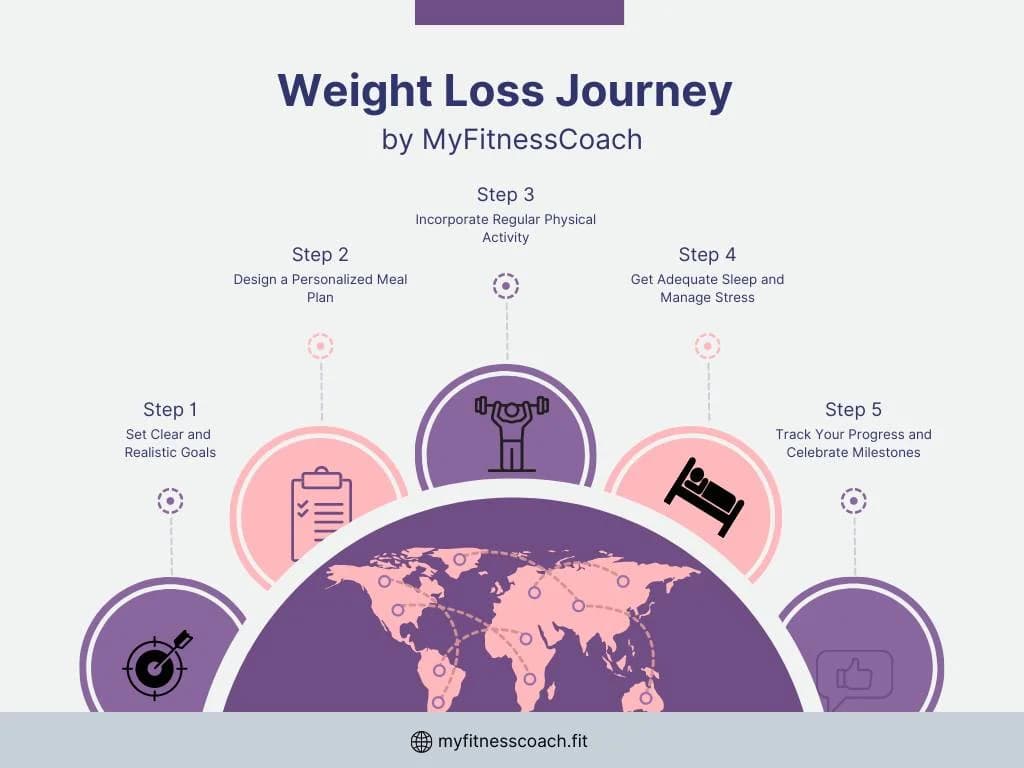
Fitness Guide: How Do I Start A Weight Loss Journey
Ready to start on a life-changing weight-loss journey? Congratulations for taking the first step towards being a better and happier version of yourself! Starting off a weight-loss journey may be both satisfying and stressful. With so much information available, having a well-defined plan and trusted assistance in achieving your goals is important. This article will help you start your weight-loss journey and achieve the results you desire.